
Although this is a bit off topic I couldn't help but post this for all of the dog kissers in class. If you just happen to have $100,000 laying around and a pet you can't stand to loose the DNA of then you can have you pooch cloned!
More gems coming up next week. The Monday and Friday seminars are particularly relevant to the topics we have been discussing in class.
This sounds like a good illustration of how the hardest part of ecology is measuring the parameters of interest. You may already be aware that bones in the fish ear, otoliths, accumulate yearly growth rings (just like trees) and so can be used to age fish but I didn't know you could get more information from them.

Monday, June 2, 2008
10:00 a.m.
Marine Science Building Auditorium, MSB 1302

*Julie Standish*
Ecology, Evolution and Marine Biology
UC Santa Barbara

Use of otolith trace-elemental signatures to identify larval
connectivity and dispersal patterns in a temperate marine fish

Advisor:  Robert Warner
 I love stuff that ties together different lectures. Here's some ecology (plant-insect interaction) and plant biology (seed development) in action.
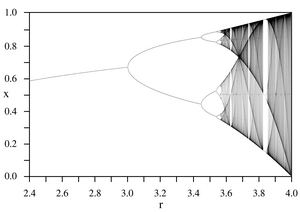 For an introduction to chaos theory the Wikipedia article isn't bad although I prefer this New Scientist article by Ian Stewart. The best introduction though is the book Chaos: Making a New Science by James Gleick which somehow manages to explain everything with very little actual math. I'm sure the library will have copies you can borrow. Even after 20 years this is still considered one of the best reads on the subject.
 Actually that's a NASA headline, not mine. It turns out they aren't currently planning to put any elephants in space. In fact elephants are waaaay back in the queue - just ahead of whales, poison ivy, ferrets and killer bees.
 We talked about how populations can respond to release from predators or competition with exponential growth. We can also consider the opposite scenario: population growth/decline when a novel predator or parasite is introduced/added to the system. Unfortunately we have many examples and the results aren’t pretty. Today on NPR’s program “Day to Day” they aired a short segment on the Emerald Ash Borer – a species of beetle accidentally introduced from
The ability of sensitive rainforest species to evolve in response to climate change is largely unknown. We show that the Australian tropical rainforest fly Drosophila birchii exhibits clinal variation in desiccation resistance, but the most resistant population lacks the ability to evolve further resistance even after intense selection for over 30 generations. Parent-offspring comparisons indicate low heritable variation for this trait but high levels of genetic variation for morphology. D. birchii also exhibits abundant genetic variation at microsatellite loci. The low potential for resistance evolution highlights the importance of assessing evolutionary potential in targeted ecological traits and species from threatened habitats.
Centre for Environmental Stress and Adaptation Research, La Trobe University, Bundoora, Victoria 3086, Australia.
 Here's an interesting article on tracking bees that has some very amusing images in the first few paragraphs.
 Here's some information on the ballast water treatment method that James mentioned. The paper is called Design and Implementation of a Continuous Microwave Heating System for Ballast Water Treatment, and is getting some press coverage as a possible solution to the ballast water spread of invasive species.
 Perhaps surprisingly there is little evidence for teaching in nonhuman animals. In a 2006 study published in the journal Science, by researchers at the University of Cambridge in England, adult meerkats in the Kalahari were shown to teach their pups how to deal with scorpions and other prey.
 What is it that makes us uniquely human? Is it our intelligence, no, dolphins and monkeys are plenty smart. Is it our capacity for self-awareness? Nope, apes, dolphins and elephants have been shown to be self-aware. Mourning the dead? Nope, elephants do that. In fact we could go through a pretty long list of traits that we might think are uniquely human, only to find one or more animal species that also show this trait. So its a relief to find a recently published study that allows us to hold on to the one trait that, so far at least, remains uniquely human - spite. (Incidentally there are very few scientific experiments I'd want to watch on video but I'd make an exception for this one. Chimps and collapsing tables of food sound like a great combination).
 A couple of years ago now the Journal of Applied Ecology had an interesting article entitled:
 In this week's Science:
 The study is the "first convincing demonstration" that bacteria can use environmental cues to anticipate events, says Michael Travisano, an evolutionary biologist at the University of Minnesota, Twin Cities. The work could open up new ways to explain puzzling behavior of microbial pathogens, which might use predictive signals to change their cell surfaces and avoid a host's impending immune attack.
 Check out this Scientific American article on the photic sneeze reflex (PSR) or the ACHOO syndrome, which describes sneezing that occurs in response to bright light. Apparently this type of sneeze reflex has a genetic component, and occurs in 18-35% of the population. Though I can’t answer James’ question (“why does it feel good to sneeze?”), maybe it’s good enough to suggest that if you can’t get that lurking sneeze out, try looking at a bright light. But don’t look directly into the sun…
 As mentioned briefly in class, herbivores’ digestion is impacted by the fact that cellulose is the principle organic compound in their diets BUT most herbivores cannot produce cellulases, the enzymes that hydrolyze cellulose. Cud chewing herbivores (i.e., ruminants) like cows and sheep rely on endosymbiotic microorganisms living within their digestive tracts to digest cellulose for them.
There is research underway to try to reduce the amount of methane Bessie produces, including making “burpless grass” and trying to introduce less burpy microbes into cow guts (from kangaroos, which have more microbes with better manners).
You can read about the efforts to create “burpless” grass in this article from Sciencedaily.com
And listen to an NPR interview about the Australian researcher working on transfer of microbes from roos to cows.
It’s a bit older, but there is a nice NPR story on greenhouse gas production from sources (like cows) other than big industry. This was aired on Ira Flatow’s show, “Science Friday”. I recommend tuning into the show when you can; it airs on, well, Fridays - locally on KCLU (102.3) from 1-2pm. It’s also online at http://www.sciencefriday.com/
 Going back to last semester but I thought this was interesting:
 Good tide pooling this morning. Find of the day was the California Brown Sea Hare - Aplysia californica. Each sea hare is both male and female, but they cannot fertilize their own eggs. Dozens pile up for sea hare orgies. They mate in lines and circles: each is male to the one in front and female to the one behind, so each is both a mother and a father. That is one x-rated gastropod....
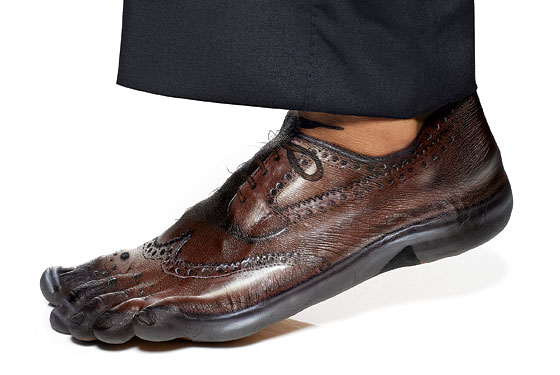 I mentioned this New York magazine article briefly at the start of class but it might be an interesting article to many of you and it does tie in to human physiology and biomechanics.
 Roger Bannister achieved world fame in 1954 at the age of 25 by becoming the first person to break 4 minutes for the mile. What many people don't know about Bannister is that he was a medical student at the time and was already carrying out experiments, using himself and friends as subjects, to investigate the effects of inhaling oxygen enriched air on the physiological response to maximum exercise.
 Hopefully many of you followed the Kitzmiller v Dover Area School District trial in 2005 that was the first direct challenge in federal court against a school district requiring the presentation of 'intelligent design'. If you didn't or are still unsure what it was all about and why it was important then you should watch the PBS 'Judgement Day' special. Cameras were not allowed in the courtroom so there are 'dramatic recreations'. You can watch the whole thing online.

 Well we saw some exercise in action today and heard about the wonderful benefits of a fitness regime for your heart, lungs and longevity. As students here you have some great facilities right on campus but getting motivated and finding the time can be difficult with all the other demands on your time. One thing that works for lots of people, especially as you get older, is to participate in community events. This gives you a target to aim for regardless of whether your goal is simply to complete the event or beat some particular time. Here are some events going on in the Santa Barbara area in the near and long term that might motivate you.
 Those of you that are interested in marine biology and diving should take this opportunity to look into the diving physiology of marine mammals which, to be quite honest make humans look pretty shabby. The Weddell seal for example can dive to over 1000' and remain there for up to an hour. Elephant seals dive down over a mile and stay down for two hours (what is this a competition?). These mammals tend to store their oxygen in blood and muscle rather than in their lungs, which would cause buoyancy problems. The Weddell seal also stores a huge amount, over 50 pints, of oxygenated blood in its spleen. The spleen contracts after a dive begins fortifying the blood with oxygenated cells. As this paper explains animals also use physiological tricks to extend their time underwater
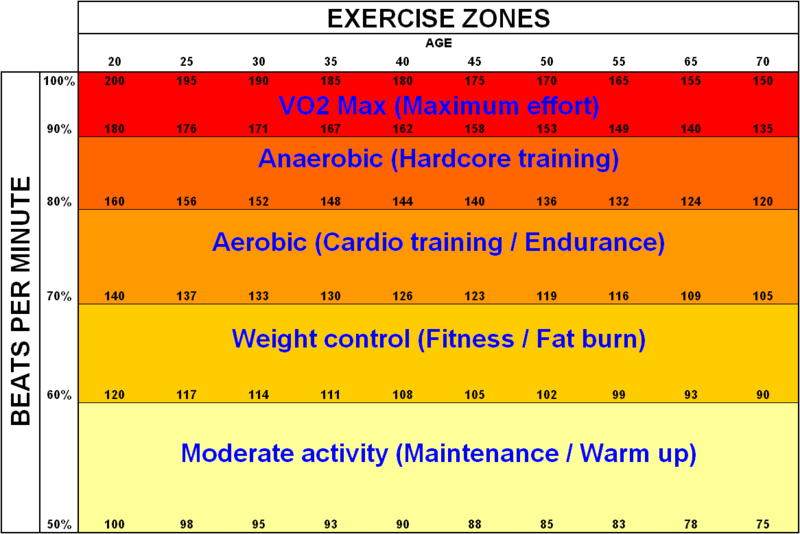 At Berkeley I was associated with both the Environmental Science program and the Department of Integrative Biology. IB was an interesting department that included ecologists, evolutionary biologists, biomechanics, sports physiologists and others. Inevitably you learn a bit about what other people in a department do and I remembered this study from a couple of years back that may become relevant to our class, our lab session on Monday, or just for general interest or edification. But first a bit of background....
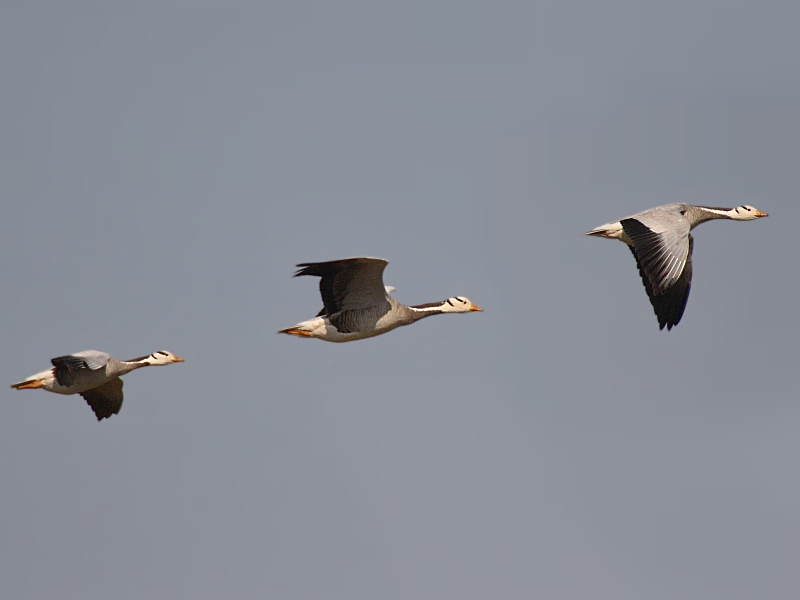 Here is a link to a nice article in Audubon magazine about the bar-headed goose – a species that migrates
  ....or drink that glass of milk. We talked about the importance of adequate levels of Vitamin D to ensure normal bone formation, but Vitamin D may also be related to cardiovascular health. Recent research indicates that people with low vitamin D levels may face an increased risk for peripheral artery disease (PAD). Remember that humans make vitamin D (through skin exposure to sunlight) but it can also be obtained through foods such as fish and fortified dairy products, or vitamin supplements.
 'Kurzweil does not believe in half measures. He takes 180 to 210 vitamin and mineral supplements a day, so many that he doesn't have time to organize them all himself. So he's hired a pill wrangler, who takes them out of their bottles and sorts them into daily doses, which he carries everywhere in plastic bags.'
