Showing posts with label Evolution. Show all posts

Monday, May 20, 2019

Courtship & Parenting Tips from the Male Superb Fairy-Wren (Malurus cyaneus)


Native to the scrubland fringes of Australia’s eucalypt woodlands, superb fairy-wrens spend most of their days hunting grasshoppers or snuggling on low-hanging branches in bundles of 2… 3… sometimes 5. Lavishly-feathered, “rampantly promiscuous,” and a common visitor of children’s parks, they’ve been ballyhooed by The Guardian as Australia’s favorite bird. Despite their cotton-ball size, these flamboyant daredevil passerines pack a suit of evolutionary aces up their tail feathers, especially when it comes to courtship!


1. Keep in mind that your vibrant plumage attracts predators


3 seasons of the year, fairy-wrens don the drab, downy coloration of a miniature koala, but come the next molt, all bets and feathers are off. With dazzling sapphire cheek plumes and a midnight-blue jabbot, the breeding plumage of the male superb fairy-wren is a spectacle of sexual selection. But while gleaming like a crown jewel captivates females, it’s also a flashy candy wrapper to predators. Being sexy is dangerous.

Male fairy-wrens are cognizant and even cautious of this (McQueen, Naimo, Teunissen et. al. 2017). In their 2017 paper, Bright Birds are Cautious: Seasonally Conspicuous Plumage Prompts Risk Avoidance By Male Superb Fairy-Wrens,” an Australian research team details differences in antipredator responses between superb fairy-wrens of different plumage types. Broadcasting the species’s alarm calls to a population in Lysterfield Park, Australia, they found that blue males were 50% less likely to forage on open ground, took over twice as long to reemerge from cover, and showed a stronger immediate response to predator alarm calls (2017). They propose that breeding fairy-wren males are well aware of their conspicuous plumage and make behavioral adjustments accordingly to avoid predation, and that flock members can benefit from the heightened vigilance of these blue males, either as an early warning system or as a bright decoy (2017).


2. When in doubt, bring her flowers


Because being fabulous ain’t enough to turn up the charm, the superb fairy-wren suitor will bequeath females with a single yellow flower petal, perhaps to accentuate his scintillating blue-black plumage. However, despite the temptingly-anthropomorphic similarities, petal-bearing is no diamond-ring proposal – more like a booty call!

Superb fairy-wrens have the highest rate of “extra-pair fertilization” (AKA cheating) out of any bird species (Double, Cockburn 2000). Though superb fairy-wren flocks are headed by an older, territorial “primary” male that is socially bonded to a single female, cheating is rampant, and a whopping 95% of their broods contain offspring sired by a different father (Mulder, 1997; Mulder, Dunn, Cockburn et. al.  1994). An observation-based study by Raoul A. Mulder, Extra-group Courtship Displays and Other Reproductive Tactics of Superb Fairy-wrens,” determined that in its 375 observations of fairy-wren courtship displays, petal bearing was performed “exclusively (97%) for extra-group females during excursions into neighbouring territories by lone males, and appears to have evolved specifically for the purpose of soliciting future extra-pair fertilizations” (1997).


3. Evolve Extra-Fancy Sperm


Polygamy’s rough – to maximize reproductive success, individuals of promiscuous species not only have to tirelessly woo as many partners as possible, but also have to deal with sexual selection post-copulation – rife with chemical manipulation, copulatory inhibitors, competitive sperm morphology, hostile pH fluctuations, and intersexual conflict, fertilization is a gametic war zone. Mating multiple times is great, but how does an organism ensure that each of its efforts successfully produced offspring?

Sometimes, it’s a numbers game. Fairy-wrens are known for their copious sperm loads – Malurus splendens, a close cousin to the superb fairy-wren, produces over 8.3 billion sperm per ejaculate (In comparison, a dose of human ejaculate only contains around 280 million) (Tuttle, Pruett-Jones, Webster 1996)!

Alongside gamete quantity, sperm variation and competition becomes especially intense amongst superb fairy-wrens, where the reproductive success of different paternal strategies vary with sperm morphology (Calhim, Double, Margraf et. al. 2011).
In quantifying the relationship between head : flagellum ratio and reproductive success in this species, Calhim, Double, Margraf et. al. mist-netted, banded, and non-invasively sampled sperm from M. cyaneus males from different reproductive stages in their life history. After observing and determining parentage of the offspring, the team calculated intrapair success, measured as the number of offspring the male sired for his social mate, as well as extrapair or “cuckolding” success, “measured as the lifetime number of illegitimate offspring that survived to four weeks after fledgling” (2011). Their study, Maintenance of Sperm Variation in a Highly Promiscuous Wild Bird,” details that intrapair success was strongly associated with a longer flagellum and relatively shorter head, while a short flagellum and a relatively large head was associated with better extrapair success (2011).


4. Help your mate teach your chicks a song to distinguish them from brood parasites.


Even after their eggs are laid and their brilliant feathers dust over, fairy-wren parents must still be on high alert: both for predators, and for the insidious Horsfield’s bronze cuckoo, who lurks around poorly-guarded nests. Given the opportunity, the female cuckoo will descend, roll one of the wrens’ eggs out of the nest, and replace it with one that looks deceptively similar – pink, with a ring of dark speckles at its base. Securely tucked within the lofty grass walls of the nest, superb fairy-wren parents would hardly be able to tell the difference, so what they do instead is sing a secret passcode to their eggs (Colombelli-Ne´grel, Hauber, Robertson et. al. 2012).

9-10 days before the brood hatches, superb fairy-wren mothers titter a fast, high-frequency trill ranging from 5782.8-11,011,2 ± 250.0 Hz, which her chicks embryonically learn as they develop within their eggs (2012). Within every incubation call is a signature sequence that is unique to each female – the hatchlings who can sing their mother’s fingerprint best are the ones who get fed, and the hatchlings that can’t imitate her calls are abandoned or discarded (2012). The females communicate this to their mates, too, so that they could aid in distinguishing their chicks (2012). The eggs hatch after 15 days, and as the cuckoos start laying 13 days into the fairy-wrens’ incubation period, their foreign chicks get less time to memorize their foster mother’s calls, and thus are most likely to be pushed or starved out of the nest (2012). The joint team of psychology and zoology researchers who reported these findings in their paper, Embryonic Learning of Vocal Passwords in Superb Fairy-Wrens Reveals Intruder Cuckoo Nestlings,” speculate that this co-evolutionary arms race between superb fairy-wrens and their brood parasites could intensify selective pressures for finer-tuned acoustic learning in both species’s offspring (2012).


All in all, superb fairy-wrens are frickin’ awesome! Ever flitting, singing, and glittering in the Aussie sun, these avian divas are a star 3.4 billion years in the making. Their richly-textured social lives have established new extremes in our study of coevolution, intersexual conflict, postcopulatory selection, and avian social psychology, and that’s barely the beginning of the profound body of research that needs to be done on this species. It just goes to show that even the tiniest species have eons to reveal about the diversity of life on Earth, and our study of evolution will never be complete without them!

SOURCES:

Colombelli-Ne´grel, D. Hauber, M. E. Robertson, J. et. al. (2012).
Embryonic Learning of Vocal Passwords in Superb Fairy-Wrens Reveals Intruder Cuckoo Nestlings. Current Biology, 22: 2155–2160.

Mulder, R. A. Dunn, P. O. Cockburn, A. et. al. (1994). Helpers liberate female fairy-wrens from constraints on extra-pair mate choice. Proceedings of The Royal Society B, 255(1344): 223-229.

Tuttle, E. M. Pruett-Jones, S. Webster, M. S. (1996). Cloacal protuberances and extreme sperm production in Australian fairy-wrens. Proceedings of The Royal Society B, 263(1375): 1359-1364.

Calhim S, Double MC, Margraf N, Birkhead TR, Cockburn A (2011) Maintenance of Sperm Variation in a Highly Promiscuous Wild Bird. PLoS ONE 6(12): e28809. https://doi.org/10.1371/journal.pone.0028809

Mulder, R. A. (1997). Extra-group Courtship Displays and Other Reproductive Tactics of Superb Fairy-wrens. Australian Journal of Zoology, 45(2) 131 - 143.

McQueen, A. Naimo, A. C. Teunissen, N. et. al. (2017). Bright Birds are Cautious: Seasonally Conspicuous Plumage Prompts Risk Avoidance By Male Superb Fairy-Wrens. Proceedings of The Royal Society B, 284(1857).

Double, M. Cockburn, A. (2000). Pre–Dawn Infidelity: Females Control Extra-Pair Mating in Superb Fairy–Wrens. Proceedings of The Royal Society B, 267(1442): 465-470.

Tuesday, March 12, 2019

Eye Morphology: Aquatic vs. Terrestrial

AQUATIC EYES

Underwater vision undergoes some immense evolutionary pressures: turbidity, spectrum of light penetration with depth, temperature, pressure gradients, and the presence of bioluminescence, amongst others (Anca-Narcisa, Ozana-Maria, Cuza et. al 2015). Fittingly, we see a diverse array of eye morphologies underwater, though a common feature amongst all these eyes is that the corneas lie relatively flat – since the refractive index of the surrounding water and the fluid inside the eye are pretty much equivalent, there’s no need for a highly refractive cornea (some aquatic organisms don’t even have one) (2015). Instead, the lens wields the brunt of the focusing power (2015). Eye placement, shape, and size are a variable of the amount of light at a given depth (2015).

Surface fish, dolphins, shrimp, and octopi have globose eyes and high-res vision – epipelagic eyes, which have adapted to high levels of exposure, often contain different screening pigments that filter light (Evans, Acosta, Bolstad 2015; see also Frank, Porter 2009).

Meanwhile, in the mesopelagic, we start seeing a reduced visible spectrum of downwelling celestial light. Telescopic eyes start occurring at deeper depths where maximizing exposure of light on the retina becomes more favorable than flexible focusing. Screening pigments are usually absent in these deeper forms, sacrificing resolution for higher sensitivity. Most mesopelagic eyes are rod-cell dominated, as being able to distinguish different visible frequencies is less advantageous in such a dark environment. Whatever cone cells are present are often for viewing the blue light of bioluminescence. 

At even deeper depths, the eyes are usually further reduced or nonexistent. 


FIG.1– teleost eyes of a yellowfin tuna. Notice the spherical lens, double-layered cornea (outer layer formed by skin), and retractor lentis muscle, which allows for accommodative lens movement (Andison, Sivak 1994). Re-drawn from Walls 1942. 
FIG.2– scallop eyes! The “mirror” layer in the eye is made up of highly-reflective guanine crystals that concentrate light into 2 layers of the retina, allowing for complex albeit small-scale imaging (Palmer et. al. 2017). Re-drawn from Speiser et. al. 2011. 
FIG.3– crystalline eyes of the mantis shrimp. Re-drawn from Physiologizing 2014. 
FIG.4– Sepia cuttlefish eye, which has convergently evolved a shape similar to human eyes (Yoshida et. al 2014). Re-drawn from Ch. 16.1 – Mollusca, ©️The McGraw-Hill Companies, Inc. 
FIG.5– Telescopic eye of a hatchetfish Argyropelecus aculeatus, a bathypelagic fish. Re-drawn from Warrant, Lockett 2004. 
FIG.6– Amongst the jawless fish, lampreys have surprisingly complex eyes, possessing a 3-layered retina and a melanin-pigmented choroid (Dubielzig 2009). Re-drawn from Dubielzig 2009.
FIG.7– Polychaete worm eyes. Re-drawn from Duke-Elder 1958. 
FIG.8– eyes of a mature sturgeonfish; the lens is secured by 2 cartilaginous papillae, but has no observable means of accommodative focus (Dubielzig 2009). Re-drawn from Dubielzig 2009.


TERRESTRIAL EYES

The first terrestrial ocular systems were presented with unique challenges. On land, the refractive index of the aqueous humor is now greater than that of the surrounding air, meaning that our first amphibious ancestors probably experienced severe nearsightedness when they first clambered to shore. Consequently, selection for strong curvature in the cornea became favorable as it accommodated for refractive differences inside and outside the eye (Anca-Narcisa, Ozana-Maria, Cuza et. al 2015). Now, focusing power becomes an interplay between both cornea and lens (2015).

Terrestrial eyes are predominantly spherical, though telescopic forms do exist amongst certain nocturnal organisms (2015).


FIG.1– eye of the oriental garden lizard Calotes versicolor. Re-drawn from Young 1981. 
FIG.2– elongated, tubular eye of an owl (upper) as well as a chicken eye (lower) for comparison – despite the difference in form, both eyes contain pecten, a comblike protrusion of blood vessels that maintains pH in the vitreous humor and nourishes the retina – these are a common feature of most bird eyes (Brach 1977). Re-drawn from Martin 2017. 
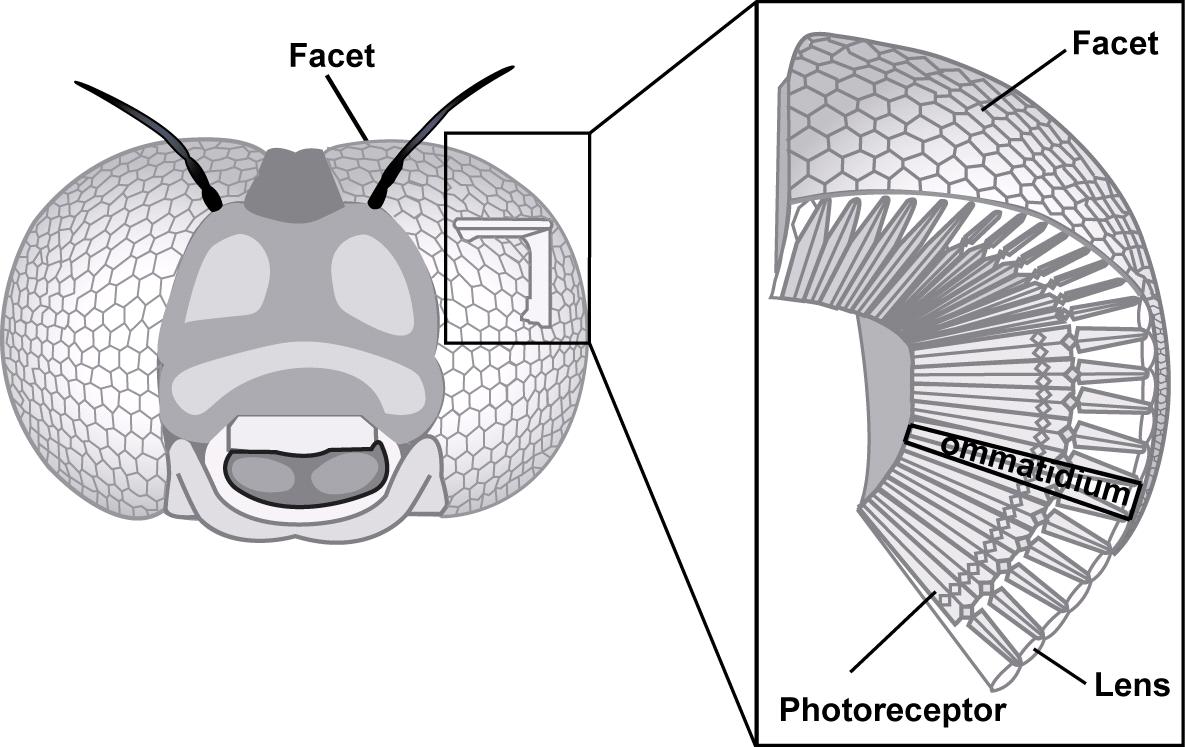
FIG.3– parts of an insect’s compound eye. Re-drawn from Ecole Polytechnique Fédérale de Lausanne. 
FIG.4– a frog eye. Re-drawn from Mangold 1931.
FIG.5– a cat’s eye. Re-drawn from Gelatt 2019.


I'll end with some questions I'm planning to look into!
  • What's with all the protruding tissue we see in birds and reptiles? Does it hinder light refraction onto the retina in any way?
  • Does that ectodermal conus in the reptilian eye have a function? What selective advantages have shaped it this way? (Also, it is a convergent characteristic to pecten, or are the two related somehow...?)
  • How many times have fovea evolved independently?
  • What's with those certain fish species that can perceive UV light? What evolutionary advantages would this provide underwater?
  • What kind of selective pressures drove the evolution of a 3-layered retina in lamprey eyesight? Are there other examples of parasites with good eyes, or is the lamprey a freak exception?
  • Why are polychaete eyes shaped like ear endoscopes? And why are sturgeon eyes shaped like sad-looking pastries?
  • Eye vs. brain size – positive or negative correlation? Would we get different answers for highly-visual vs. less-visually oriented clades?
  • Compound eyes come in a huge variety of patterns, colors, lusters, facet shapes. What environmental factors/niche characteristics influence each quality?
  • Determinants of pupil shape?
  • When is it more advantageous to have a greater number of eyes rather than eyes that are larger/have better visual acuity and/or range of vision?


SOURCES

Dubielzig, D. (2009). A Survey of Ocular Anatomy and Pathology of Vertebrate Species [PowerPoint slides]. Retrieved from https://www.vetmed.wisc.edu/pbs/dubielzig/pages/coplow/PowerPoints/Wildlife_Dz_Worksh_08.pdf
Warrant, E. Lockett, N. A. (2004). Vision in the Deep Sea. Biological Reviews 79(3):671-712.

Anca-Narcisa, N. Ozana-Maria, P. (2015). “Aquatic” vs. “Terrestrial” Eye Design – A Functional Ecomorphological Approach. Biologie animală, 61: 101-114.

Wilk, L. (2009). Mantis Shrimp Eye Structure and Function, Semantic Scholar. 1-6.

Duke-Elder, S. (1958). System of Opthalmology: The Eye in Evolution. St. Louis, Missouri: C. V. Mosby Company.

Martin, G. R. (2017). What Drives Bird Vision? Bill Control and Predator Detection Overshadow Flight. Frontiers in Neuroscience 1(11):619.

Young, J. Z. (1981). The Life of Vertebrates. Oxford, England: Clarendon.

Gelatt, K. N. (2019). Eye Structure and Function in Cats. Retrieved from https://www.merckvetmanual.com/cat-owners/eye-disorders-of-cats/eye-structure-and-function-in-cats

Fig. 3. Composite eye and ommatidies of an insect [scientific diagram]. From Ecole Polytechnique Fédérale de Lausanne. Retrieved from https://passion-entomologie.fr/wp-content/uploads/2015/12/compound_eye.jpg

Brach, V. (1977). The Functional Significance of the Avian Pecten: A Review. The Condor 79:321-327.

Palmer, B. A. Taylor, G. J. Brumfeld, V. (2017). The Image-Forming Mirror in the Eye of the Scallop. Science. 358(6367): 1172-1175.

Andison, M. E. Sivak, J. G. (1994). The functional morphology of the retractor lentis muscle of a teleost fish, Astronotus ocellatus. Canadian Journal of Zoology, 1994, 72(11): 1880-1886.

Yoshida, M. Yura, K. Ogura, A. (2014). Cephalopod eye evolution was modulated by the acquisition of Pax-6 splicing variants. Nature, 4 : 4256.

Evans, A. B. Acosta, M. L. (2015). Bolstad, K. S. Retinal Development and Ommin Pigment in the Cranchiid Squid Teuthowenia pellucida (Cephalopoda: Oegopsida). PLOS One, 10(5): 1-11.

Frank, T. Porter, M. (2009). Spectral sensitivity, visual pigments and screening pigments in two life history stages of the ontogenetic migrator Gnathophausia ingens. Journal of the Marine Biological Association of the United Kingdom, 89(1): 119-129.

Wednesday, March 6, 2019

Bird Journal - Brown Pelicans


A flock dozing off at Elkhorn Slough – July 23, 2017. Monterey Bay, CA


Brown pelicans are the lumbering Paul Bunyans of the seabird world. The snaking arcs of their necks look almost prehistoric, and indeed, the earliest known pelican, dating back to over 30 million years ago, exhibits little to no change in fundamental morphology (Louchart, Tourment, Carrier 2011)! 

As exclusively-oceanic predators, they have a bunch of cool sea-faring adaptations: specialized glands that allow them to drink salt water (Schmidt-Nielsen, Fange 1958), air sacs under their skin for added buoyancy (US Fish and Wildlife Service 2009), as well as a hunting technique that is novel amongst other Pelecaniids. 

The brown pelican is unique in that it’s the only plunge-diving pelican species in existence (2009). While most others of its clade will scoop at fish while sitting at the water’s surface, brown pelicans dive-bomb the sea like war jets, tucking their wings behind them in one deadly thrust. The timing of this part is crucial. If they don’t corkscrew to the right by just the right amount, they could fatally injure their trachea and esophagus. 

Assuming all goes well underwater, they flap their gums open. Their gular pouch balloons out like a 3-gallon net, ensnaring the hapless fish between their jaws: anchovies, sardines, herring, sheepshead, mullet, pigfish… Occasionally, they’ve even been seen gulping down crustaceans (2009). 

These ambush strategies have proven fruitful in chasing the ever-fast and finicky epipelagic fish, but plummeting from heights of 60 ~ 70 feet is not a skill they are born with (2009). Before maturing into sleek, bow-winged adults, pelican youngsters look something like this: 

It’s like an overcooked marshmallow tried to grow feathers (a 3-5 month old juvenile) – July 3, 2017. San Francisco, CA.

These little ones, while cute, are honestly terrible at fishing. I got the chance to see this particular one attempt a dive, during which it lost balance and smacked against the water in an explosive belly-flop! A 1969 paper, “Age and Hunting Success in the Brown Pelican (Pelicanus occidentalis)” by Gordon H. Orians, attests that plunge-diving is a technique that takes years to develop. Using a paired t-test of nearly 2000 observations off the coast of Playas del Coco, Costa Rica, Orians compared the catch rates amongst different life stages of brown pelicans, and found significant evidence that the learning period for the juvenile birds takes at least 18 months to 2 years (1969). Orians remarks that this phenomenon, if widespread, could in part explain why brown pelicans, as do many sea-faring bird species, exhibit an unusually delayed maturation (1969) – while juvenile brown pelicans fully fledge at about 3-5 months of age, they don’t reach sexual maturity until they’re about 3 years old (US Fish and Wildlife Service 2009). 

Once they hit breeding age, their chocolatey manes melt away. Their lores and bill area flush with color, and their eyes metamorphose from deep brown to salty-pale. 

As social birds, adult pelicans can often be seen soaring together in V-formation over the beaches of North and South America. There are lots of them diving off Santa Barbara and especially IV, so next time you see one of these bombardiering specialists, try and see if you could pick out the steps in its technique! 


SOURCES:

Department of the Interior, U.S. Fish and Wildlife Service (2009). Brown Pelican [Fact sheet]
Retrieved from
https://www.fws.gov/home/feature/2009/pdf/brown_pelicanfactsheet09.pdf

Louchart, A. Tourment, N. Carrier, J. 2011. The earliest known pelican reveals 30 million years of evolutionary stasis in beak morphology. Journal of Ornithology, 152(1): 15-20. 

Orians, G. H. 1969. Age and Hunting Success in the Brown Pelican (Pelecanus occidentalis). Animal Behavior, 17: 316-219. 

Schmidt-Nielsen, K. Fange, R. 1958. The Function of the Salt Gland in the Brown Pelican. The Auk, 75(3): 282-289. 

Tuesday, February 26, 2019

McShea & Brandon's BIOLOGY’S FIRST LAW – controversial, but worth a read


To anyone searching for a cool theoretical biology/evolutionary mechanisms book, Biology’s First Law by Daniel W. McShea and Robert N. Brandon is a pretty radical read! While its arguments are too complex to summarize in one blog post, its overarching argument proposes genetic drift as the first Zero-Force Evolutionary Law (ZEFL) of biology:


“ZFEL (general formulation): In any evolutionary system in which there is variation and heredity, there is a tendency for diversity and complexity** to increase, one that is always present but may be opposed or augmented by natural selection, other forces, or constraints acting on diversity or complexity” (3).


“ZFEL (special formulation): In any evolutionary system in which there is variation and heredity, in the absence of natural selection, other forces, and constraints acting on diversity or complexity, diversity and complexity will increase on average” (4).


There are some problematic aspects to this argument, however. It’s unclear how much value it holds as a null hypothesis, and it conflicts with the traditional view of drift as a constraint on variation. In addition, a 2012 review, “Puzzles for ZFEL: McShea and Brandon’s zero force evolutionary law,” by Barret et. al, rebutes McShea and Brandon, deeming the special formulation of ZFEL impossible as if it holds true that mutations indicate the presence of a force, and the absence of mutations indicate a constraint of the force, then a force or a constraint must always be present (2012). ZFEL also butts heads with Hardy Weinberg equilibrium, which McShea and Brandon regard as “problematic as a zero-force law because it mixes genuine evolutionary forces … with a non-force, namely drift” (McShea, Brandon 100). But despite the dissent over ZEFL as a viable biological law, I still considered Biology’s First Law a valuable read. ZEFL is elegant, intuitive, and holds a potentially formative perspective on what we consider the “norm” in evolutionary history. I also found its contrast with inertia (the zero-force law of physics) intriguing.


Browsing the literature available about this hypothesis gave me an interesting glimpse into the philosophy of science and how theoretical disputes play out in the academic world. If any of you guys have also happened to have read this book, or have put it on your reading list, let me know what you think!

**defined as the number of part types” or “degree of differentiation among parts” to avoid the anthropocentric connotations of colloquial complexity.

Sunday, March 4, 2018

Divorce of a Lizard

The phrase "in sickness and in health" is commonly included in many marriage vows, but may not be the finest evolutionary strategy for many monogamous species. Shingleback skinks (Tiliqua rugosa) are usually quite the adorable monogamous lizard; some pairs have been found to reunite to mate for over 20 years in a row. This puzzled behavioral ecologists, because unlike other monogamous species (like migrating birds and humans), monogamous reptilians don't partake in childrearing. They questioned what the fitness advantage of monogamy could be. A long term study on parasites of the shingleback could be their answer! It found that males were less likely to retain their previous monogamous partner if their tick load was higher.  From a parasitic perspective, having a monogamous pair makes a lot of sense, because pairs with low infection levels are less likely to become infected if they remain with the same partner. Alas, this lizard "marriage" only remains "in health"; when the male gets too many ticks, the fitness advantage is lost, and so his partner!
If you wanna learn more about this study and rad shingleback skinks:   https://link.springer.com/content/pdf/10.1007%2Fs00442-005-0224-z.pdf

Tuesday, February 27, 2018

Viruses Are the Kings of Life

       So, in class, we touched a little bit on viruses when we were defining what constitutes life. I think we eventually came to the conclusion that viruses are not alive, but that got me thinking: if viruses aren't alive, where did they even come from?
        After a little research, I found that there are three main theories as to how viruses came to be the infectious, flu-inducing, fun little friends we know today: the Virus-First Theory, the Reduction Theory, and the Escape Theory. 
         The Escape Theory hypothesizes that viruses evolved directly from cells. Supporters of this theory imagine a vesicle enclosing a small part of a cell's genome and "escaping" the cell, forming a membrane-bound body of genetic material. This would account for the similarities we see amongst viruses and their host genomes.
         The Reduction Theory finds the birth of viruses in a primordial, parasitic cell that lived its life buried inside another cell, sucking away resources as parasites do. Scientists think this parasitic cell eventually left its host, losing some of its cellular machinery in the process, and thus, became permanently dependent on a host, like viruses we see today. However, one would expect to see strong genomic similarities between viruses and some of the smaller parasitic cells of today, but this is not what we see.
          Finally, the Virus-First Theory (which I am rather biased towards) makes WAY more sense! This proposes that before life even evolved, viruses were the reigning leaders of the primordial soup. It's not hard to imagine these somewhat simple, protein-bound containers of genetic material are ancestors of the complex cells that we see today. Some support for this theory includes the fact that viruses are the most physically abundant and genetically group on Earth, which would make sense if they've been evolving for even longer than cells. Also, while many parts of the cellular genome are conserved in viruses, there are many parts of the viral genome that are NOT conserved in cells. Where would viruses have gotten these virus-exclusive parts of their genome if the evolved from cells?? Also also, it would explain why viruses remain universally compatible and can infect across all three domains of life if viruses were the predecessors of all three domains of life.
          Many people refute the Virus-First Theory because it violates the fundamental definition of viruses in that they rely on a host to survive. How could viruses have survived if they came before the cells, whose machinery they need to live, you may ask? Well, my friend, who says a viral host has to be a cell? The primordial soup that these viruses would have evolved in would have been ridden with complex molecules, including proteins. It is quite possible that viruses could have used the extra-cellularviral environment as machinery for manufacturing a capsid coat, especially considering that viruses have been co-evolving with cells for a long time; the machinery they use now is probably very different from the machinery they used back then.
           Welp, this has been a long, drawn-out rant about why viruses are the king. Comments/discussion/you're-totally-wrong-Shay are all welcome. :)

Thursday, March 12, 2015

Early Arthropod Evolution?

An article published today shows a paper that discusses a newly found fossil that would have looked something like this reconstruction when alive.
 Aegirocassis benmoulae  had modified legs, filters for feeding, and gills. These traits provide evidence for early arthropod evolution. This fossil has been dated to be over 480 million years old, and was found in Morocco. It's interesting how many new 'game changing' fossils are being found and how each of them adds something new to understanding evolution.

http://www.sciencedaily.com/releases/2015/03/150312083651.htm

Wednesday, March 4, 2015

Douglas Emlen: Animal Weapons

This past Monday in Intro Genetics (EEMB 129, it's a great class), I asked my Professor, Scott Hodges, if he was attending the EEMB seminar that day, as I've gone to almost every one this quarter and he is also usually there. He told me that in fact he is hosting the person giving the seminar, and that this is a talk I should definitely try to attend. So I did, and I brought a couple people who work in the same lab as I do with me. Well, time well spent because this seminar was one of the best I've ever been to. And I've been to quite a few.

The person giving the seminar was Doug Emlen, a biologist at the University of Montana. He has recently published a book called Animal Weapons: The Evolution of Battles, which looks at the evolution of large morphological weaponry in animals ranging from horns on small dung beetles to enormous antlers on huge elks. He discussed the conditions necessary for these types of weapons to develop, including environmental pressures such as intense competition, resources able to fight over and won, and one on one duels.

A discussion on this would have been great on its own, but he took it one step forward in an incredibly interesting direction. Dr. Emlen compared this animal arms race to the human arms race, finding some incredible similarities between the two. For example, he talked about a study done with caribou, where 11,000 confrontations were observed, and out of all of them, only 6 resulted in an all out battle between the two animals. These animal weapons are used as a deterrent, as male caribou "size up" other males in order to determine if a duel would be wise, and in most cases decide that it's not worth it. A comparison was then made to the Cold War, where the United States and USSR both had a huge amount of weaponry that acted as a deterrent, and in the end, no one officially declared war.

Below is an interview that was conducted on Scishow last month with Dr. Emlen that highlights the basic points of Monday's seminar (minus the comparison to the human arms race, unfortunately).


Friday, January 24, 2014

de novo origin of genes

Kathy sent me a link to a recent paper in Science describing the appearance of new genes in Drosophila.
“Until recently, de novo origin of genes was considered to be so unlikely as to be impossible,” comparative genomicist Aoife McLysaght of the Smurfit Institute of Genetics at Trinity College in Dublin, Ireland, who was not involved in the study, told The Scientist in an e-mail. “[T]his population level analysis is important because it gives a new insight into the very early stages of the origin and establishment of genes de novo.”

This is pretty exciting stuff. Here's a link to a report in The Scientist and you'll find the Science paper citation there.

Monday, May 13, 2013

Repost: Why Giant Bugs Once Roamed the Earth

We've talked a bit about gigantic dragonflies found in the fossil record from the Carboniferous period.  I mentioned that a recent study on oxygen limitation in insects suggests that the leading theory about these giant arthropods  - that they got big because the high levels of O2 made it possible - may not be correct.  Interestingly they propose that young insects HAD to grow large to avoid oxygen poisoning.

Read more here (the National Geo article, which is also the source of the photo above).  The original research article by Verberk and Bilton in PLoS ONE is here.

Verberk WCEP, Bilton DT (2011) Can Oxygen Set Thermal Limits in an Insect and Drive Gigantism? PLoS ONE 6(7):

Wednesday, January 30, 2013

Spirit Bears

A white mother Spirit bear and a black cub offspring; the father must have been black and the cub is a heterozygote for the coat color polymorphism. This picture really reminds me of the old Polar Bear joke which is not really suitable for printing here...

It's Carl Zimmer again with a really nice practical example of one of the simulations we will look at in class tomorrow - the interplay between genetic drift and natural selection: Snow Coyotes and Spirit Bears

The Bear part of the story is based on this paper in the journal 'Evolution': POPULATION GENETICS OF THE WHITE-PHASED “SPIRIT” BLACK BEAR OF BRITISH COLUMBIA

The Spirit (or Kermode) bear is a white-phased black bear found on the northwest coast of British Columbia, and is one of the most striking color polymorphisms found in mammals. A single nucleotide polymorphism at the melanocortin 1 receptor gene (mc1r) locus is the cause of this recessive w variant. Recently, evidence suggests that the white color provides a selective advantage during salmon hunting. Here we examine the effects of favorable selection, gene flow, genetic drift, and positive-assortative mating in an effort to understand the establishment and maintenance of this polymorphism and the observed heterozygote deficiency for mc1r but not for microsatellite loci. It appears that genetic drift was important in the establishment of the w allele and that the selective advantage was important to counteract immigration from populations without the w allele. Positive-assortative mating can result in a deficiency of heterozygotes but needs to be quite high to result in the large deficiency of heterozygotes observed, suggesting that other factors must also be contributing. Examination of population genetic factors, singly and jointly, provides insight into the establishment and maintenance of this unusual polymorphism.

Sunday, January 27, 2013

The origin of Eukarytotes

Carl Zimmer's 2009 essay for Science magazine on the Origin of the Eukaryotes is well worth reading.

If the eukaryote cell hadn't evolved, we wouldn't be here to discuss the question of how it originated. In the eighth essay in Science's series in honor of the Year of Darwin, Carl Zimmer describes one of the most important transitions in the history of life: the origin of cells with a nucleus, which gave rise to every multicellular form of life.

Monday, April 30, 2012

Mouse to elephant

I was wrong, you CAN go from mouse size to elephant size. The catch is that it will take 24 million generations! A curious fact is that the reverse, elephant sized to mouse sized, only takes 100,000 generations.


Research published in the Proceedings of the National Academy of Sciences (The maximum rate of mammal evolution) describes increases and decreases in mammal size following the extinction of the dinosaurs 65 million years ago.
The asymmetry between rates can potentially be explained by distinct but not necessarily mutually exclusive mechanisms. One possibility is that there are fewer physical, biological, and environmental constraints to decreasing as opposed to increasing size. Pedomorphic processes are good candidates as mechanisms of size reduction, because all animals must pass through a smaller size during their ontogeny. We hypothesize it is easier to halt the developmental program and reproduce early than to grow larger and delay maturity. Another possibility is that selection favors size decreases because smaller animals have higher rates of reproduction with life histories characterized by rapid maturity, high birth rates, and short lifespans. Finally, decreases in size may reflect adaptation to a more generalized ecological niche, whereas increases in size require novel adaptations to obtain more food and space to fuel higher whole-organism metabolic rates.

Saturday, April 28, 2012

Norwegian sludge

Sometimes the oddest corners of biology research can suddenly hit the headlines (okay, the science headlines).

Mankind's remotest relative is a very rare micro-organism from south-Norway. The discovery may provide an insight into what life looked like on earth almost one thousand million years ago. 

 or, as ScienceDaily put itRare Protozoan from Sludge in Norwegian Lake Does Not Fit On Main Branches of Tree of Life

Monday, April 23, 2012

Robert Trivers

I posted this to Gauchospace for Kathy's new seminar class but I just realized we don't have much (any?) overlap between the two classes and it is relevant here too.

The paper this week for that class was a classic by Robert Trivers on parental choice of sex ratio in offspring. This is a topic that I mentioned very briefly last quarter, at least for halpodiploidy, and we will retrun to briefly in our animal behavior lecture.

In doing some background reading on Robert Trivers I came across an interesting quote about him from an article in the Guardian newspaper:

"Robert Trivers could have been one of the great romantic heroes of 20th-century science if he'd died in the '70s, as some people supposed he would."

It made me realize just what an extraordinary flourishing of creative, and often very novel, thinking he had over a period of a few years with seminal papers virtually every year of the first half of the seventies (1971 - Reciprocal Altruism, 1972 - Parental Investment and sexual selection, 1973 - sex ratio of offspring, 1974 - Parent offspring conflict, 1976 - Haplodipoidy and social insects). In many ways this is the sort of creativity associated with mathematicians who often do all their important and novel work early in their career.

Here's a section from a Boston globe article on Trivers in 2005:

Rebuffed in his demand for early tenure, he left Harvard in 1978 to teach at the University of California, Santa Cruz. He befriended Huey Newton and joined the Black Panthers. He all but stopped publishing. As the literary agent John Brockman put it when introducing Trivers at a recent talk, ''Over the years there were rumors about a series of breakdowns; he was in Jamaica; in jail. He fell off the map.''
His ideas, however, seemed to do just fine without him. In the 1970s, Trivers published five immensely influential papers that braided genetics into behavioral biology, using a gene's-eye view of evolution to explain behaviors from bird warning calls to cuckoldry to sibling rivalry to revenge. According to David Haig, a Harvard professor of biology and a leading genetic theorist, each paper virtually founded a research field. ''Most of my career has been based on exploring the implications of one of them,'' says Haig. ''I don't know of any comparable set of papers.''

In 1976 Trivers wrote the introduction to Richard Dawkins "Selfish Gene' and tossed out this gem:

'(I)f, (as Dawkins argues) deceit is fundamental to animal communication, then there must be strong selection to spot deception and this ought, in turn, to select for a degree of self-deception, rendering some facts and motives unconscious so as not to betray - by the subtle signs of self-knowledge - the deception being practised. Thus, the conventional view that natural selection favors nervous systems which produce ever more accurate images of the world must be a very naive view of mental evolution.'

Here he is at a TEDx conference in Jamaica expounding on the self-deception idea 35 years later.

Thursday, March 8, 2012

Your inner fish

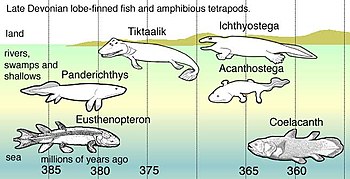
Paleontology hit the headlines a few years ago when paleontologists discovered a fossil fish, Tiktaalik roseae, that showed the beginnings of digits, wrists, elbows and shoulders, as well as a skull, neck and ribs that resemble those of tetrapods like today's familiar four-legged land animals. Paleontologists suggest that it was an intermediate form between fish which lived about 385 million years ago, and early tetrapods which lived about 365 million years ago. Its mixture of fish and tetrapod characteristics led one of its discoverers, Neil Shubin, to characterize Tiktaalik as a "fishapod". Like any self-respecting fossil Tiktaalik has its own homepage.

Neil Shubin wrote a popular science book  'Your Inner Fish' which is a very easy and highly recommended. We tend to focus on those areas where we have 'improved' on our fish-like ancestors (walking upright, doing pushups, inventing calculus etc) but what I found fascinating, was a discussion of olfaction (smelling) and how it's all been downhill since our aquatic past.

The human genome only contains about 23,000 protein-coding genes - which itself is an amazing fact. The other 98.5% of our genome consists of non-coding genes, regulatory sequences, introns and endogenous retrovirus sequences.

About 1,000 of those 23,000 protein-coding genes code for different odor receptors but less than half of them are functional in modern humans. Which says a lot about the importance of different senses in the evolution of humans from an aquatic ancestor (smell) to a terrestrial life (vision). Our evolutionary history is revealed in our genes.

Finally, Neil Shubin, appeared on the Colbert Report in 2008 and did a pretty good job.


(Parts of this post were recycled from previous blog postings).