
Showing posts with label Exercise physiology. Show all posts
Showing posts with label Exercise physiology. Show all posts
Wednesday, June 1, 2011
National Running Day

Thursday, May 26, 2011
Shocking research

A new study reveals that the rise in desk jobs over the past 50 years may play a significant role in the obesity epidemic.
Actually, like most of biology, the actual study (in PLoS ONE) is a little more interesting in that they estimate that the
'daily occupation-related energy expenditure has decreased by more than 100 calories (in the last 50 years), and this reduction in energy expenditure accounts for a significant portion of the increase in mean U.S. body weight for women and men over the last 5 decades.'
This is in contrast to previous studies that have largely focused on food consumption.
Also of interest is the note that:
'Our estimation of a reduction of more than 100 calories per day in occupation-related energy expenditure over the last 50 years would have been adequately compensated for by meeting the 2008 federal physical activity recommendations of 150 minutes per week of moderate intensity activity or 75 minutes per week of vigorous intensity activity....when physical activity is assessed with accelerometers the number of Americans that achieve the physical activity recommendations falls to 1 in 20.'
Thursday, January 28, 2010
CCS, Telomeres and Gaucho fun
 I guess this is more relevant to cell biology or physiology but I thought some of you may be interested in this article in the New York Times today that describes research published in the journal Circulation that demonstrates that physical exercise can actually keep your cells younger.
Cell 'age' was assessed by looking at their telomere length. Unless you've been living under a rock for the last year you are probably aware that telomeres are tiny caps on the end of DNA strands and the discovery of their function won several scientists, including CCS biology graduate, Carol Greider, the 2009 Nobel Prize in medicine.
The research looked at four groups of people: young and sedentary; middle-aged and sedentary; young professional runners in their 20s; and finally middle-aged longtime runners.
Cells in both the active and sedentary young adults had similar-size telomeres because when you are young none of your cells are old enough to have significantly shortened telomeres. But when they examined the middle aged groups they found a HUGE difference
In general, telomere loss was reduced by approximately 75 percent in the aging runners. Or, to put it more succinctly, exercise, Dr. Werner says, ‘‘at the molecular level has an anti-aging effect.’’
This study of course raises a lot of questions but it is really nice to have such a large effect and hopefully follow up studies will clarify how much exercise is required and for how long. The middle aged runners in the study were running an average of 50 miles a week and had a 35 year training history.
Anyhow if you want to stop your telomeres shortening you may need to start running now. Fortunately this Saturday sees the return of the UCSB Running Series. A good incentive to get out of bed and drag yourself around the lagoon a few times (and then eat pizza).
Monday, May 18, 2009
25mph
Not exactly the most surprising prediction but in a blog posting last year, Most obvious nickname ever..., I wrote:
'If there was a regular 140m or 150m event I imagine the world land speed record would be set over that distance.'
Unless I'm reading the wrong news sources the news that a human has just exceeded 25mph in an athletic event for essentially the first time ever has received remarkably little attention.
On a cold and rainy Sunday in Manchester, England, on a specially laid out 150m track on the streets Usain Bolt made it look easy. His time, 14.35 works out at 10.453 m/s or 23.38mph. even more impressively the final 100m of the 150m (ie a 100m with a flying start) was timed at 8.72. This works out to be 11.468m/s or 25.65mph.
Wednesday, April 29, 2009
Anticipatory Thermogenesis
 Yesterday Claudia mentioned that although control of the autonomic nervous system is generally considered to be involuntary we can, in addition, actually consciously influence many of these systems.
Posting a reference to Tim Noakes yesterday reminded me of his recent work with Lewis Gordon Pugh, a British 'Environmentalist, Explorer and Swimmer.'
Pugh is most famous for his cold water swims which he usually does to publicize global warming and the melting ice-caps. These swims are done without a wetsuit, in water as cold as zero degrees centigrade (because of the salt seawater freezes a couple of degrees below zero).
An article in New Scientist magazine a few months ago reveals some of the science behind Pugh's remarkable ability. Most interesting was the discovery by his trainer, the aforementioned Tim Noakes, that Pugh is able to consciously raise his body temperature.
As the swim gets closer, he psychs himself up by listening to music by the likes of Eminem and P. Diddy. In the minutes before entering the water, Pugh recalls these emotions and is able to raise his core temperature, without doing any physical exercise, to 38.4 °C. That's an extraordinary 1.4 °C above his normal body temperature. Such "anticipatory thermogenesis" has been observed before, but not to such a high degree.
You can read the actual paper in the appropriately named 'Journal of Thermal Biology': Body temperatures during three long-distance polar swims in water of 0–3 °C.
Pugh appears to have reached some of the limits of the human body:
In 2007 he swam 1 kilometre in the coldest water yet - a glacial -1.7 °C - at the geographic North Pole.
"When I went below 0 °C the cells in my fingers started to freeze. It took another four months before I could feel my hands again," he says. After reaching his goal of swimming both in the Arctic and in Antarctica, Pugh has for now hung up his towel.
Tuesday, April 28, 2009
Muscle pain - four recent(ish) papers and one new class
 A good question today about why your heart never aches after exercise - after all, a good bout of exercise works your heart just as much, if not more, than any other muscle.
There's a simple answer, the heart doesn't have the same type of pain receptors as the muscles, but a fuller answer is much more interesting and shows some surprising gaps in our knowledge.
There are two types of muscle 'pain' associated with exercise. There is fatigue during exercise, and we don't really know what causes that, and there is pain after exercise (DOMS or Delayed Onset muscle Soreness), and we don't really know what causes that! The cause of fatigue is a pretty hot topic. One theory is that it is caused by a problem with the calcium flow inside muscle cells. One of the functions of calcium is to help control muscle contractions. Recent research published in PNAS found that after extended high-intensity exercise, small channels in the muscle cells begin to leak calcium, which leads to weakened muscle contractions. This leaked calcium also stimulates an enzyme that attacks muscle fibers and also leads to fatigue. It is really surprising to me that such a basic phenomenon is still fairly unknown.
DOMS is thought to be caused by a breakdown of muscle fibers and microscopic tears in muscle tissue that occurs as a result of exercise. This typically occurs 1 to 2 days after exercise, particularly if the exercise is new or extreme. There is also evidence that DOMS is more extreme if the muscle movement is eccentric - that is the muscle elongates whilst under tension (eg lowering a weight, starting out with your hand by your shoulder and gradually lowering the weight will produce an eccentric contraction of the biceps muscle).
It used to be thought that lactic acid was involved in both these phenomena but recent evidence suggests that lactic acid may have been unfairly blamed for years and that it may play a more useful role.
In both these cases actual pain is probably caused primarily by swelling which puts pressure on nerves and produces the sensation of muscle pain.
Although the heart does not have the same type of stretch receptor that registers this type of pain it does have some pain receptors. Strangely enough it has the same type of nerve receptors that register the burning sensation from the capsaicin in hot peppers. These are the receptors that are thought to cause the sensation of chest pain from a heart attack. The heart may be less vulnerable to DOMS since it does not undergo eccentric contraction.
All of this is somewhat complicated by the role of the brain. Obviously it is in your interest to stop exercising before damage occurs to your muscles, and, in particular, to your heart. Tim Noakes, a South African sports scientist, has renewed interest in a rather old theory, that Noakes calls the 'Central Governor Model', that the brain is the primary organ that dictates how fast, how long, and how hard humans can exercise.
As you can tell I find this whole intersection of physiology and exercise very interesting. So I have bitten the bullet and next quarter (ie Fall 2009) I will be teaching a CCS class on Endurance Physiology. This will be a seminar format class where we read and discuss papers very much like those listed above and look critically at the evidence for and against various theories and the implications these have for the way people train for what I have generally termed endurance events (swimming, cycling, and running or, for those crazy enough, all three). Loosely inspired by the fact that for the first time in over 25 years Santa Barbara will have a large Marathon event in the fall of 2009.
Sunday, June 1, 2008
Most obvious nickname ever...
When we went to watch Chris running on the treadmill at Rob Gym Vincenzo asked what the fastest speed anyone could run at was. Well the answer just changed (albeit only very, very slightly). Usain 'lightning' Bolt, a 21 year old Jamaican, is now officially the fastest man in the world with a time of 9.72 for the 100m in New York last night. Since 1 m/s = 2.237 mph that means Usain was doing 10.28 m/s or 23.01mph, just a hair over the previous record of 9.74 or 22.98 mph.
In a slight complexity there is just one person, Michael Johnson, who ran at a faster average speed for 200m (the world record of 19.32 s or 10.35 m/s or 23.15 mph). This is because of the fixed costs of the slow start. Sprinters probably accelerate up to maximum speed within 60m and then are gradually slowing down. Due to this fact the world record speeds for 100m and 200m are always similar. The instantaneous speed reached is not measured as a matter of course but 10m split times for the 100m and radar gun data suggest that humans can reach instantaneous speeds of almost 12 m/s which would be in excess of 25 mph. If there was a regular 140m or 150m event I imagine the world land speed record would be set over that distance.
That's still slower than a hippopotamus.....
Wednesday, May 7, 2008
Blood guns?
 Roger Bannister achieved world fame in 1954 at the age of 25 by becoming the first person to break 4 minutes for the mile. What many people don't know about Bannister is that he was a medical student at the time and was already carrying out experiments, using himself and friends as subjects, to investigate the effects of inhaling oxygen enriched air on the physiological response to maximum exercise.
I read an interesting article describing the conditions of these experiments on inclined treadmills in the 1950's.
You had to breath from great gasbags and they had blood guns which sprang a blade into your finger to measure lactic acid levels as you labored on. You poured sweat, your spine turned to rubber, and driving up the incline there was the most extraordinary effect on your chin and knees meeting in front of you. Near the end, there was blood all over, and when you broke, you staggered and rolled off onto a mattress, trying to hit the off switch as you went down. Roger himself ran to breaking point on at least 11 occasions. Compared to that, the 4-minute mile was like a day off.
Sir Roger Bannister went on to become an eminent neurologist and retired in 2001. He will be 80 next year. The current mile record for men is 3:43 set by Hicham El Guerrouj of Morocco and it has stood since 1999.
Saturday, May 3, 2008
Lactate threshold
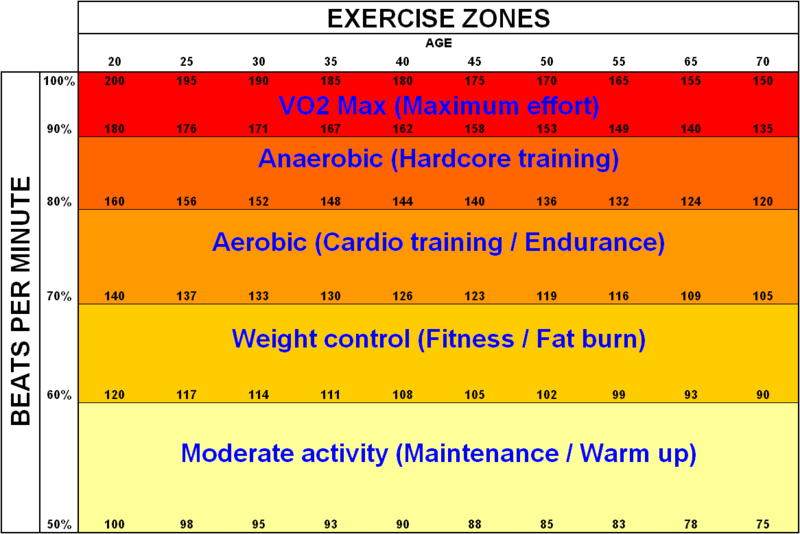 At Berkeley I was associated with both the Environmental Science program and the Department of Integrative Biology. IB was an interesting department that included ecologists, evolutionary biologists, biomechanics, sports physiologists and others. Inevitably you learn a bit about what other people in a department do and I remembered this study from a couple of years back that may become relevant to our class, our lab session on Monday, or just for general interest or edification. But first a bit of background....
As you may know we have two modes of energy use - aerobic and anaerobic. Over short distances or time periods we can perform (run, swim, cycle etc) at high rates for short periods of time but this involves the build up of lactic acid. Sooner or later this will limit your ability to perform anaerobically and you switch to aerobic mode. The bad news is that your aerobic capacity is largely inherited and training can only increase it by 10-15%. The good news is that this so called 'lactate threshold' which is the pace or work rate when lactic acid begins to accumulate can be improved quite dramatically by training. So if you do interval training or other types of training to improve your lactate threshold you are improving your ability to clear lactate and your ability to work at a high level for longer. If you run, then a 5k or 10k pace should be slightly above your lactate threshold. That's why pacing is so important in these shorter races because if you go out too fast you are way above your lactate threshold and will never clear it. The aim is to slowly accumulate a manageable amount of lactic acid by the end of the race, and because the race is relatively short you won't have it for long. In longer races (half marathon and above) you cannot afford to have any lactate accumulation.
Anyway, what I thought was interesting was that in 2006 George Barlow at Berkeley showed that the much demonized lactic acid is actually used as a fuel and isn't just a waste product. This doesn't really alter any training advice but it's interesting and just goes to show you should always question the things that 'everyone knows'.
Wednesday, April 30, 2008
Running after Antelope
 You may be familiar with the radio show This American Life. If not, then you'll just have to listen to it because it is hard to describe. Each week they have a number of stories loosely based around a theme.
Best of all they stream practically all their shows on the web. (There is an option to pay to download a show but you can also just listen to it for free just by clicking on 'Full episode'.)
Back in 1997 one of their perennial favorites Scott Carrier told a great story about his attempt to run down an antelope. (It's actually the second story in the show but takes up the majority of the hour long show and starts at about 5:40 if you want to skip straight to it). For reasons a little too complicated to explain Scott and his brother are trying to show it would have been possible to hunt down antelope on foot simply by doggedly chasing them until the antelope become exhausted.
But don't take my word for it, listen to the story. It's got some interesting observations on biology, grad school and life generally and it is a great example of storytelling.
Oh yes, and it's relevant to class because I was reading about the physiology of the pronghorn antelope. This is one of those animals that someone has managed to get onto a tread mill in the lab. In the wild pronghorns will trot along at 40mph and could polish off a 10k race in about 10 minutes. In stress tests they tend to increase the incline and in this case they got the antelope to do about 25mph up an 11% slope and recorded a maximum oxygen consumption of 300ml of oxygen per kg per minute. Compare that to the highest values ever recorded in a human (93ml of oxygen per kg per minute in a Scandinavian cross country skier). 'Normal' values are more likely to be closer to 45 or 50 in a fit person or as low as 20 to 30 in a sedentary person. Humans, at rest, need 3.5 ml of oxygen, every minute, for each kilogram of body weight just to support the cellular activities in the tissues that keep us alive so the increase in oxygen use during exercise is impressive.
Another interesting fact about Pronghorn is that there is nothing remotely fast enough to chase them in the current American fauna. Whatever drove their evolution to higher speed and endurance is long gone.
Cheetahs by the way are far less impressive. Although they can exceed 60mph in a sprint they cannot run at this speed for more than 20 or 30 seconds without overheating. To catch a cheetah all you need to do is follow it for a few minutes and it will soon become exhausted, overheated and, apparently, also very tame in this state. Yes, this is the class that teaches you useful information.
Subscribe to:
Posts (Atom)