Here's a link to an article in Science about how they found nerve cells inside adult teeth that are able to revert back into stem cells!
http://www.sciencemag.org/news/2014/07/unexpected-stem-cell-factories-found-inside-teeth
Tuesday, June 12, 2018

Glowing Fungi Forest in Japan
There are roughly 80 species of bioluminescent fungi in the world. Just like a flower that only produces a scent at night in order to attract nocturnal pollinators, such as a moth, these fungi produce their light in order to attract spore-spreading bugs. Even more curious, these fungi use an enzyme to produce luminescence that is similar to that in fire flies and angler fish, oxyluciferin. However, they have found that the fungi's enzymes are, what they call, "promiscuous," meaning that they can produce a variety of different colors just by adding different compounds to the same luminescent enzyme.
There is a forest in Shikoku, Japan that is full of these species of fungi. Just somewhere to add to your bucket list.

There is a forest in Shikoku, Japan that is full of these species of fungi. Just somewhere to add to your bucket list.

Monday, June 11, 2018
Came across this NPR article about African baobab trees starting to die off at faster rates (people think that it's due to climate change) :( I think these trees were included in lecture last quarter! The article also mentions some obstacles researchers face when trying to determine a baobab tree's age...


Sunday, June 10, 2018
Convergent Evolution of Consciousness (Octopi)
Octopi are the only non-vertebrate
animals to be protected by the Animal (Scientific Procedure) Act. This is due
to their apparent possession of a rudimentary level of consciousness. Octopi
are notorious for their stubbornness as lab participants. They are known to
squirt water at the experimenters, repeatedly short circuit the lights above
their tanks, escape, and even sabotage equipment. They have been observed in
developing preferences for certain people over others even when the two in question
are dressed identically. They can use tools, communicate, and learn through observing
others. Octopi brains are lateralized, like mammalian brains, but the majority
of their 500 million neurons are spread throughout their body and arms, giving
the arms almost a mind of their own. A search for mirror neurons in octopi has
also begun. If found, it would mean that octopi may be able to infer the
emotional states of another animal just like we do.
Many who meet these creatures say that they
walk away feeling as though they had encountered another mind or consciousness.
However, the last common ancestor or humans and octopi was roughly 600 mya, and
accordingly, their brains are much different than ours. Considering this, we
cannot explain our application of sentience to octopi to a shared history or
kinship with them. We cannot assume that human consciousness erupted,
fully-formed. It developed and grew more complex just as other traits did. Some
scientists are searching for this origin of the mind and consciousness and
attempting to trail it back to the awareness we possess today. Could octopi be
in these beginning stages that they are looking for? But from a convergent
evolutionary trajectory. Evolution managed to build minds twice over. Who is to
say it could not inspire consciousness twice as well?
Like the flight of birds versus
bats, the consciousness found in octopi and humans, may be alike in function
but morphologically different. The separation of the octopi’s neurons into its
body seemingly gives its arms minds of their own. When placed in an unknown tank
with food in the center, it is common for some of the octopus’ arms reach
toward the food, others toward corners and safety, and others, still, explore
independently, creating a sort of tug of war within the body itself. One could
speculate that octopi in the early stage of developing a new type of “sense of
self,” one where consciousness and motive is distributed throughout the body
instead of unified as it is in humans. Despite the ecological and strategical
barriers, could octopi on their way to becoming the next big sentient being on
the planet? And what will we do if they succeed?... just a question.
Saturday, June 9, 2018
Molecular clues for synesthesia
Synesthesia: when the stimulation of a sense causes an additional sensation. For instance, hearing a sound causes someone to see a color, or a shape.
Researchers have found three families who experience synesthesia are connected by a rare variation of genes that contribute to a process known as axonogenesis, a process that is crucial to establish neuronal connections in the brain. There is still more research being done on it, but imagine that. Groups of people (families) all connected by a gene that allows them to experience this phenomena. Something to sit and wonder about.
https://www.sciencedaily.com/releases/2018/03/180305150549.htm
http://www.pnas.org/content/115/12/3168
Researchers have found three families who experience synesthesia are connected by a rare variation of genes that contribute to a process known as axonogenesis, a process that is crucial to establish neuronal connections in the brain. There is still more research being done on it, but imagine that. Groups of people (families) all connected by a gene that allows them to experience this phenomena. Something to sit and wonder about.
https://www.sciencedaily.com/releases/2018/03/180305150549.htm
http://www.pnas.org/content/115/12/3168
Reversing the effects of dementia (in mice)
Very recently, scientists have found a way to reverse some of the effects of dementia in mice -- with a drug, Zileuton.
Building off of previous studies that showed the dangers of leukotrienes, a compound that attempts to protect nerve cells but doesn't necessarily do a good job at it, researchers considered whether blocking such compounds could possibly reverse the damage and "fix memory" in mice that already allocated tau pathology (distinguished by "neurofibrillary tangles" and "disrupted synapses"). They blocked it by using Zileuton, a drug that obstructs the production of leukotriene by blocking a certain enzyme.
They conducted a study in which they treated tau transgenic mice with zileuton at 12 months old (60 in human years!). After 16 weeks, they found that the mice that had been treated performed better than mice that hadn't been, demonstrating the reversal of "memory deficiency".
https://www.sciencedaily.com/releases/2018/06/180608101905.htm
Phillip F. Giannopoulos, Jian Chiu, Domenico Pratic. Learning Impairments, Memory Deficits, and Neuropathology in Aged Tau Transgenic Mice Are Dependent on Leukotrienes Biosynthesis: Role of the cdk5 Kinase Pathway. Molecular Neurobiology, 2018; DOI: 10.1007/s12035-018-1124-7
https://link.springer.com/article/10.1007%2Fs12035-018-1124-7
Building off of previous studies that showed the dangers of leukotrienes, a compound that attempts to protect nerve cells but doesn't necessarily do a good job at it, researchers considered whether blocking such compounds could possibly reverse the damage and "fix memory" in mice that already allocated tau pathology (distinguished by "neurofibrillary tangles" and "disrupted synapses"). They blocked it by using Zileuton, a drug that obstructs the production of leukotriene by blocking a certain enzyme.
They conducted a study in which they treated tau transgenic mice with zileuton at 12 months old (60 in human years!). After 16 weeks, they found that the mice that had been treated performed better than mice that hadn't been, demonstrating the reversal of "memory deficiency".
https://www.sciencedaily.com/releases/2018/06/180608101905.htm
Phillip F. Giannopoulos, Jian Chiu, Domenico Pratic. Learning Impairments, Memory Deficits, and Neuropathology in Aged Tau Transgenic Mice Are Dependent on Leukotrienes Biosynthesis: Role of the cdk5 Kinase Pathway. Molecular Neurobiology, 2018; DOI: 10.1007/s12035-018-1124-7
https://link.springer.com/article/10.1007%2Fs12035-018-1124-7
Friday, June 8, 2018
"sex" chromosomes
In 2010, Dr. Paul James sat down to have one of the strangest conversations he's ever had with a patient. As a clinical geneticist, he's always asked to screen baby's chromosomes for abnormalities, but he found some unseen abnormalities in the parent instead.
In this conversation, a pregnant woman discovered that half of her body was chromosomally male. What did this mean for her sex? Well, nothing really. She is still a woman.
But what does this mean for science? Sex is a lot more complex than we thought. We knew that all along, since we began to define intersex identities, where a person's sexual anatomy does not coincide with their "sex" chromosomes".
And what does "sex chromosomes" mean anyways? We used to consider the feminine XX to be the default for all fetuses, with the SRY gene on the Y chromosome determining testes development. But the "default" was disproven by the discovery of the WNT4.XY, a gene that promotes ovarian development and suppresses testicular development. When this gene is present, the fetus is female, and extra copies can cause abnormalities in the genitals.
Interesting research that has been done with SRY genes includes a study done on mice in which scientists discovered that keeping their ovaries was a life long process. They found that FOXL2 is a transcriptional factor that prevents "transdifferentiation of an adult ovary to a testis". When this factor was deleted, the levels of testosterone in the mice were similar to normal XY mice.
But what does this mean for science? Sex is a lot more complex than we thought. We knew that all along, since we began to define intersex identities, where a person's sexual anatomy does not coincide with their "sex" chromosomes".
And what does "sex chromosomes" mean anyways? We used to consider the feminine XX to be the default for all fetuses, with the SRY gene on the Y chromosome determining testes development. But the "default" was disproven by the discovery of the WNT4.XY, a gene that promotes ovarian development and suppresses testicular development. When this gene is present, the fetus is female, and extra copies can cause abnormalities in the genitals.
Interesting research that has been done with SRY genes includes a study done on mice in which scientists discovered that keeping their ovaries was a life long process. They found that FOXL2 is a transcriptional factor that prevents "transdifferentiation of an adult ovary to a testis". When this factor was deleted, the levels of testosterone in the mice were similar to normal XY mice.
Wednesday, June 6, 2018
Ectotherms give themselves fevers
A couple weeks ago, someone asked whether or not ectotherms are able to get fevers as a way to fight off infection. I found a really interesting BBC article that confirms that ectotherms do get fevers, but they are not created internally. Studies show that when infected with a virus or bacteria, many ectotherms will prefer a warmer environment. The warmer environment can raise their body temperature above normal, creating a fever, to help fend off an infection. This phenomena is called behavioral fever and can be life saving for a diseased individual.
To learn more, check out the article:
http://www.bbc.com/earth/story/20170608-why-some-cold-blooded-animals-can-get-a-fever
To learn more, check out the article:
http://www.bbc.com/earth/story/20170608-why-some-cold-blooded-animals-can-get-a-fever
Tuesday, June 5, 2018
Adult-onset allergies
I love eating fruit. If I suddenly developed an allergic reaction to certain types of fruit, that'd be super not-great. I have a friend who suddenly developed an allergic reaction to cherries as a teenager!
Adult-onset allergies are food allergies that arise when an individual is in adulthood. The immune system mistakenly identifies the food as harmful. Here's a fun YouTube video that explains allergic reactions.
Apparently being exposed to the food is a potential way to reverse the allergic reaction. As allergy prevalence seems to be increasing, more people are concerned about preventing/reversing food allergies. This made me wonder if immuno-compromised individuals still experience allergic reactions. Here is a 2006 Pediatrics paper that shows that the immune system of immunosuppressed individuals (for an organ transplant) still responded to allergies...
Monday, June 4, 2018
C. Elegans Connectome
So related to the nervous system of animals is the connectome of C. elegans, a complete diagram of how every neuron in an individual worm connects to one another. C. elegans is the only organism with a complete connectome, and it provides a foundation for researchers to build upon. Here is awesome stuff about it and I am sure you can look up other articles too.
Here is a 3D diagram of the C. elegans connectome:
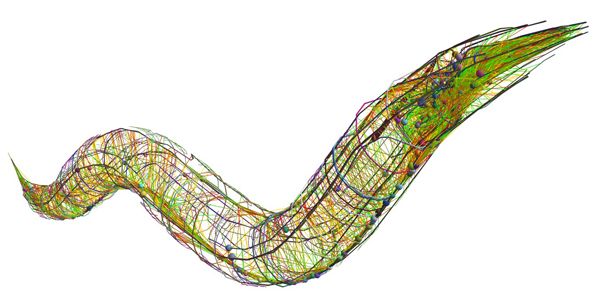
Here is an article discussing the connectome and its use in research:
https://www.scientificamerican.com/article/c-elegans-connectome/
Here is a video of a robot that operates with the C. elegans connectome:
https://www.youtube.com/watch?v=YWQnzylhgHc
The video and robot itself are pretty boring, but remember that the worm's nervous system is pretty simple, with about only 300 neurons, so worm behavior is also pretty simple (they really just wiggle around). And that this robot has not been programmed with these movements; it is learning. The connectome is like a form of artificial intelligence, basically the robot has the worm's "brain". That wording is probably inaccurate, but I do not know a lot about computer science or artificial intelligence, just that robot with worm nervous system=awesome.
Here is a 3D diagram of the C. elegans connectome:
Here is an article discussing the connectome and its use in research:
https://www.scientificamerican.com/article/c-elegans-connectome/
Here is a video of a robot that operates with the C. elegans connectome:
https://www.youtube.com/watch?v=YWQnzylhgHc
The video and robot itself are pretty boring, but remember that the worm's nervous system is pretty simple, with about only 300 neurons, so worm behavior is also pretty simple (they really just wiggle around). And that this robot has not been programmed with these movements; it is learning. The connectome is like a form of artificial intelligence, basically the robot has the worm's "brain". That wording is probably inaccurate, but I do not know a lot about computer science or artificial intelligence, just that robot with worm nervous system=awesome.
Sunday, June 3, 2018
Ocean warming associated with increased human infections
I read this interesting study entitled Climate influence on Vibrio and associated human diseases during the past half-century in the coastal North Atlantic. Here's a summary of the paper, feel free to look it up and read more!
Intro
In this study, researchers used the Continuous Plankton Recorder (CPR) archive, a long term survey of phytoplankton and zoo plankton. With the archive, they were able to analyze the DNA of plankton over a span of 50 years to find the relative abundance of vibrio bacteria in nine different locations that have undergone rapid warming.
What are vibrio?
Vibrio are marine picoplankton, there are more than 110 recognized species, many are known human and animal pathogens. Cholera is caused by the pathogen Vibrio cholerae, Vibrio parahaemolyticus and Vibrio vulnificus infections are associated with high mortality worldwide, and V.cholerae O1 and V. parahaemolyticusserotype O3:K6 have been responsible for two of the most significant bacterial pandemics.
The issue: Recent data have shown that Vibrio-associated illnesses are increasing worldwide!
Results
Researchers found a positive correlation between the relative abundance of vibrio and sea surface temperature. Next, they crossed this data with epidemiological studies on Vibrio-related infections and found that over the past 50 years there has been an increase in Vibrio related human infection that mirrors the increase in Vibrios in the ocean.
Intro
In this study, researchers used the Continuous Plankton Recorder (CPR) archive, a long term survey of phytoplankton and zoo plankton. With the archive, they were able to analyze the DNA of plankton over a span of 50 years to find the relative abundance of vibrio bacteria in nine different locations that have undergone rapid warming.
What are vibrio?
Vibrio are marine picoplankton, there are more than 110 recognized species, many are known human and animal pathogens. Cholera is caused by the pathogen Vibrio cholerae, Vibrio parahaemolyticus and Vibrio vulnificus infections are associated with high mortality worldwide, and V.cholerae O1 and V. parahaemolyticusserotype O3:K6 have been responsible for two of the most significant bacterial pandemics.
The issue: Recent data have shown that Vibrio-associated illnesses are increasing worldwide!
Results
Researchers found a positive correlation between the relative abundance of vibrio and sea surface temperature. Next, they crossed this data with epidemiological studies on Vibrio-related infections and found that over the past 50 years there has been an increase in Vibrio related human infection that mirrors the increase in Vibrios in the ocean.

How to Hijack a Cockroach's Nervous System
Researchers were able to stimulate a cockroach's motor neurons (inducing it to kick its leg) and interpret impulses from sensory neurons (differentiate between different braille characters that the roach is in contact with) with an "electronic nerve network" of electric currents.
 I think this is pretty cool, especially considering how society has a tendency to treat the brain as this mystical unknown thing capable of immense power; but at the end of the day, it's just a mechanism like anything else in the body. The brain just happens to be a mechanism that we know a bit less about than the others. But, this experiment is certainly a step forward.
Here's the link to the article in case y'all wanna check it out: https://www.nature.com/articles/d41586-018-05322-7
 I think this is pretty cool, especially considering how society has a tendency to treat the brain as this mystical unknown thing capable of immense power; but at the end of the day, it's just a mechanism like anything else in the body. The brain just happens to be a mechanism that we know a bit less about than the others. But, this experiment is certainly a step forward.
Here's the link to the article in case y'all wanna check it out: https://www.nature.com/articles/d41586-018-05322-7
Matrix of Neurons in our Intestine: "Second Brain"
We spoke about neurons the other day and physiology so I thought this was a relevant but kind of weird article! Basically, this article talks about the "intestinal brain" which is a matrix of millions of neurons that control our large intestine and colon independently without any direction from the brain. Studies of this matrix have shown that this neuronal network actually mirrors the brain in early stages of its development. They've actually hypothesized that this system evolved before our central nervous system did, meaning it is the earliest functioning brain in our body... which is actually a pretty interesting takeaway from the article. There's more places you can link out to from this article if you're interested and want to learn more!

https://www.livescience.com/62683-colon-brain-neuron-firing-pattern-detected.html

What do fungi enjoy around a campfire? S’pores!
If you think back ages ago, the first week of spring quarter, you might remember the very first topic we covered- fungi.
Since then, because I'm a weirdo, I've sorta kept an eye out for mushrooms on campus. And by "sorta kept an eye out," I mean go completely out of my way to walk through places where I might find some. (And I did btw... I took pictures but I'm too lazy to add them.)
Now, I've always thought they were really cool, and because I subscribe to many different science channels, I am quite exposed to cool things about them.
--------------------------------------------------------------------
We talked about truffles and how expensive they were, but did you know that the most expensive fungus in the world is actually a parasitic fungus that certain economies depend on?
Here's a video from Gross Science: The World's Most Expensive Fungus
That is a fungus belonging to the genus Ophiocordyceps. You may have heard of another famous fungi that mind controls it's victims in ants, leading them to their doom.
There's actually a really good book (and movie I think) that takes this concept and runs with it. It's called The Girl with All the Gifts by M.R. Carey. You can buy it here. The star of the show, if I remember clearly, a fictional (don't freak) fungus of the same genus.
--------------------------------------------------------------------
Speaking of fungal assassins, Fusarium Oxysporum was a superninja fungus that humans were helpless against that wiped out all of the Gros Michel bananas and nearly all bananas we had.
Hank explains this in the video: The Terrifying Truth About Bananas
BUT there's bad news... A new fungal assassin has emerged and it's next target is the banana we have today.
Another scishow video: Bananas Are Losing the War on Fungus
--------------------------------------------------------------------
But do fungal assassins only target bananas? Hell no! They're after frogs too!
I kinda gave it away but here's yet another scishow video: What's Killing the World's Amphibians?
--------------------------------------------------------------------
BUT WAIT! Not all fungal assassins come in the form of specialized killers. Some are just deadly monsters that are ready to kill anything that messes with it. The Death Cap is a quiet inconspicuous mushroom spreading in Northern California.
*If you watch only a single video from this post, please watch this one!!!*
mini rave: Deep Look is amazing! They have super high definition and awesome narration! And they even make music specific to each video that fits wonderfully!!! I look forward to every single post!
--------------------------------------------------------------------
Don't let these guys give fungi a bad rep though. Some fungi bring death, while others make life possible.
Forests plants need them to communicate with each other using a fungal internet that is referred to as the "Wood Wide Web."
They even allowed for the succession of life on land! I think I've shared this video already (it's a cool one) but just in case I haven't here it is: When Giant Fungi Ruled
If you haven't heard of the concept of the "Great Filter" then click the link! Personally, I think fungi play a key role in the development of life. It might be what sets us apart! :)
--------------------------------------------------------------------
I didn't cover everything, but this video does a pretty good job at bringing up all the points I've made and more: 10 Fantastic Fungi Superpowers
(That first thing about psilocybin mushrooms is really fascinating... but this post is too long to add any more. You guys know what my next post is going to be on now!!!)
--------------------------------------------------------------------
There you have it. Fungi are cool. They take lives, they save lives, and they made life possible, bringing it from simple algae to the complex diversity we have today.
I think I've taken a lichen to them. :P
AMAZING DOCUMENTARY
Check out this amazing documentary about our local marine ecosystems! It was all filmed without scuba tanks which is insanely impressive. Really cool to have such a diverse ecosystem just offshore!
Subscribe to:
Posts (Atom)