If anyone is interested in doing research over the summer and is interested in ticks then check out this opportunity:
Looking for an undergraduate research assistant to work on a field experiment investigating the effects of large mammals and climate on survivorship rates of juvenile ticks in an oak woodland system at Tejon Ranch in Kern Co., CA. This is part of an ongoing NSF-funded project investigating the direct and indirect effects of large herbivores and climate on ticks and tick-borne disease dynamics.
The position would entail construction of 15 cm^3 hardware cloth cages, deployment of iButton temperature sensors, field deployment of larval ticks, and checking on tick survival status (alive vs dead) every 2 weeks from July – mid September. The candidate would work alongside an experienced research technician. The ideal candidate should be comfortable in remote settings on rough dirt roads, traversing uneven terrain through grass and thorny vegetation, and able to tolerate hot conditions (100+ F).
If interested, please contact Devyn Orr, devyn@ucsb.edu, in the next 2 weeks.
Tuesday, March 19, 2019

Monday, March 18, 2019
Spring Paid Research Internship
If anyone has a background in robotics/engineering/programming this internship may be a good fit for you. Spread this around to other people you thing might be interested! Here's the Ad:
Ad for undergraduate researchers, spring 2019
Lab: Dr. Kelly Caylor
Department(s): Geography, Ecology, Earth Research Institute
Job description: undergraduate researcher (paid)
Dr. Kelly Caylor (Geography, Bren School, Earth Research
Institute) is seeking two motivated
undergraduate student researchers, to be hired
as part-time research assistants on a project for the spring quarter, 2019.
Students will assist Dr. Caylor and graduate student
Elizabeth Forbes (EEMB) in design, construction, and testing of autonomous,
remote-sensing carbon dioxide cycling sensors (“flux-bots”). Flux-bots are
designed to measure the rate of carbon dioxide cycling from the soil to the
atmosphere, and will have the capacity to do so autonomously (e.g. no
researcher present) and remotely (e.g. some data storage/transmission
capacities), thereby improving upon existing methods of determining soil carbon
cycling. The flux-bots will be installed in the field in central Kenya in
summer 2019 (likely July/Aug), both to test the bots against existing,
traditional methods and to collect data on the influence of large wildlife
species on rates of carbon cycling.
At UCSB in spring 2019, students will be responsible for assisting
in the design and construction of the flux-bots, and will have leadership
opportunities in the form of running experiments testing their performance
against a traditional carbon dioxide flux sensor.
Ideally, we would like to recruit students who are
experienced and interested in one or more of the following:
-
Applied robotics/engineering
-
Environmental sciences and tools development for
such studies
-
Programming (preferably some aptitude in Python)
Start date: Spring quarter, 2019
Expected hours per week: 10-20
Salary: to be determined post-hire
Please email Dr. Caylor and Elizabeth Forbes for
consideration by UCSB’s spring break (March 25th): caylor@ucsb.edu,
elizabethforbes@ucsb.edu
with your resume/CV, and a statement (no more than one page) describing your
interest in the project, any experience in research/employment that might be
relevant to the project, and skills that will be of utility for the project.
Historical Understanding of Earthquakes

In our last class, someone brought up a question regarding the relative understanding scientists would've had in the 1800s regarding the causes of earthquakes. I did a little bit of digging and found this nice, quick read about the historical understandings of earthquakes and the progression of which modern understandings arose. Almost all work to be done began in the late 1800s/early 1900s and was performed by English and Japanese scientists in Japan or America.
If you want to give the article a read, here it is: https://projects.eri.ucsb.edu/understanding/history.html
Sunday, March 17, 2019
New Orca Species
I was scrolling through the science section of the Times and ran across this article about a possible new species of Orca Whale. I think it's a good example of parapatric speciation. The article also has a fun video of the whales interacting with each other.
https://www.nytimes.com/2019/03/07/science/type-d-killer-whale.html
-Paige
https://www.nytimes.com/2019/03/07/science/type-d-killer-whale.html
-Paige
Another Resource for Summer
Hi guys,
I thought of another resource that I think would be helpful to most of you. I'm not sure whether we covered REUs during last quarter but I'll just take my chances and go over them again.
REUs are summer research positions funded by the National Science Foundation, and they often provide a stipend as well as housing. REUs can take you abroad to places like Costa Rica or Puerto Rico, but they have plenty of options within the US. For example, the lab I work in here at UCSB has two positions for summer (Mazer lab).
https://www.nsf.gov/dir/index.jsp?org=BIO
The link above is for general biological sciences, but they have programs within other areas of STEM as well.
-Paige
I thought of another resource that I think would be helpful to most of you. I'm not sure whether we covered REUs during last quarter but I'll just take my chances and go over them again.
REUs are summer research positions funded by the National Science Foundation, and they often provide a stipend as well as housing. REUs can take you abroad to places like Costa Rica or Puerto Rico, but they have plenty of options within the US. For example, the lab I work in here at UCSB has two positions for summer (Mazer lab).
https://www.nsf.gov/dir/index.jsp?org=BIO
The link above is for general biological sciences, but they have programs within other areas of STEM as well.
-Paige
EEMB 184 - Summer Sessions
Hi everyone,
Last summer I interned at the campus greenhouse with Cameron, the greenhouse manager (she brought in the plant cart earlier this quarter). I learned a lot about greenhouse pests, plant diversity in Santa Barbara and plant care in general. Learning about plants is a great way to interact with our local environment, and I found myself far more engaged when walking around campus than I had been before.
I would highly recommend this for any of you that have yet to solidify your plans for the summer.
-Paige
Last summer I interned at the campus greenhouse with Cameron, the greenhouse manager (she brought in the plant cart earlier this quarter). I learned a lot about greenhouse pests, plant diversity in Santa Barbara and plant care in general. Learning about plants is a great way to interact with our local environment, and I found myself far more engaged when walking around campus than I had been before.
I would highly recommend this for any of you that have yet to solidify your plans for the summer.
-Paige
Friday, March 15, 2019
Youth Climate Strike Today!
Today students all around the world protested inaction on climate change. We had a demonstration here on campus today in front of the library.


While the demand for government action to decelerate climate change is global, in the U.S. those who joined the strike today are demanding the implementation of the Green New Deal, a declaration of a state national emergency on climate change, and the termination of current and future fossil fuel projects among other efforts to preserve the future of our environment.
Attached are a few links for those interested in today's strike
Mysterious "Madame" of Lotusland
Bruce depicted the late proprietor of Lotusland as so extravagant and mysteriously benevolent and I was curious to see if history matched his description. The Lotusland website turns out to have Madame Ganna Walska's biography and a timeline of the history of the garden that I found interesting and wanted to share :)
https://www.lotusland.org/learn/lotusland-history/
https://www.lotusland.org/learn/lotusland-history/about-madame-walska/
Hydrocarbon Contamination Decreases Mating Success in a Marine Planktonic Copepod
Hydrocarbon Contamination Decreases Mating Success in a Marine Planktonic Copepod
I remember hearing a talk a while ago about how copepods have acute chemosensory abilities that allow them to preform certain functions. One of which is finding the location of potential mates. They even have the ability to cancel out the pheromone trail they are following with their own to prevent any other male competitors from following. I decided to look into the affect that changes in the ocean would have on this ability, since it seems it would have a narrow range for sensing the specific chemicals released by a female. That is when I found the paper titled, "Hydrocarbon Contamination Decreases Mating Success in a Marine Planktonic Copepod" by Laurent Seuront. In the paper they investigate the impact hydrocarbon contamination has on the copepod ability to follow these trails, and therefore, their level of mating success. In the study it was found that due to this increase in hydrocarbon contamination, copepods are becoming less able to find their mates in the water; posing important ecological questions. Some of these inquiries include; how are organisms like copepods going to adapt to the changes they are to face, such as affecting their physiology, feeding, and ability to reproduce.
Citation:
Seuront L (2011) Hydrocarbon Contamination Decreases Mating Success in a Marine Planktonic Copepod. PLoS ONE 6(10): e26283. https://doi.org/10.1371/journal.pone.0026283
My Presentation in Washington D. C.
Just for fun. This was my presentation at AJAS 2019 in Washington D. C. earlier this quarter. Sorry the power point is sort of hard to see because of the lighting.
Bug Display
Claudia said I should post the pictures from the bug display I made as a kid as one of my blog posts!
This was the Bug display I made and presented at the LA county fair when I was 8.


This was the Bug display I made and presented at the LA county fair when I was 8.


Challenges of Herbarium Collections
It was a nice trip when I visited CCBER. Herbarium collections are quite important for ecology, for example, they can provide important genetic information of rare species. The information may also help scientists to study the population history, such as the population turnovers or bottlenecks. However, there are also several challenges. One is the preservation methods. Different methods could influence the quality and the genetic information of herbarium species. Usually, the herbarium collection dried by using physical methods, such as compressing, or using chemical reagent, including ethanol and formaldehyde, to preserve it. The information to be lost is another problem since the DNA information in the herbarium specimens decays quickly. This would not provide enough information for extra DNA studies afterward, especially in PCR approaches.
Source: Bieker, V. C., & Martin, M. D. (2018). Implications and future prospects for evolutionary analyses of DNA in historical herbarium collections. Botany Letters, 165(3-4), 409-418.
Interesting Read if You Like Viruses
I came across this article when I was doing some research on different types of viruses.
This article, Can Plant Viruses Cross the Kingdom Border and Be Pathogenic to Humans?, challenges the current idea that only phytoviruses infect plants, so plant viruses could not cause disease in humans. This, however, does not seem to be the case! There are many plans viruses that have a chocking similarity to animal viruses and can actually be seen causing a small immune response in non-human mammals and humans. Although they do not seem to cause full blown disease responses, certain mutated plant viruses could certainly pose a threat. Scientists may have been to quick to construct a solid border between plant and animal viruses, as they are now seeing many similarities between the two. Not to mention the fact that only a small amount of plant viruses have been identified and documented! Their similarity to animal viruses suggests a common ancestor, which further supports the idea that plant viruses could infect humans as well.
Click on the link to see their overall conclusion!
Posted By Fiona McBride on Malika’s Computer :)
Sleep Allows for the Repair of DNA Damage in Zebrafish Brains
According to paper in Nature Communications, a function of sleep may be repairing double-stranded DNA breaks that have accumulated in the brain during waking hours. Time-lapse imaging of chromosomal markers in neurons in the of genetically-engineered zebrafish larvae, researchers saw that chromosome dynamics associated with DNA repair was increased during sleep. It was also noted that sleep deprivation prevented the repair from happening efficiently.
When the fish were awake, the chromosomes were relatively static and DNA double-stranded breaks accumulated. Chromosomal dynamics in individual neurons were also compared to two other cell types. Only the chromosome dynamics in the neurons showed fluctuation, whereas the chromosomes of the other cells were static in comparison. The results established chromosome dynamics as a potential marker to define single sleeping cells and propose that the restorative function of sleep is nuclear maintenance.
Another study established a link between sleep deprivation and DNA damage in doctors, together the studies imply that consideration should be given to our lifestyle choices, shift working patterns, sleep patterns, and overall long-term health.
Sources:
Sleep increases chromosome dynamics to enable reduction of accumulating DNA damage in single neurons
The effect of sleep deprivation and disruption on DNA damage and health of doctors
When the fish were awake, the chromosomes were relatively static and DNA double-stranded breaks accumulated. Chromosomal dynamics in individual neurons were also compared to two other cell types. Only the chromosome dynamics in the neurons showed fluctuation, whereas the chromosomes of the other cells were static in comparison. The results established chromosome dynamics as a potential marker to define single sleeping cells and propose that the restorative function of sleep is nuclear maintenance.
Another study established a link between sleep deprivation and DNA damage in doctors, together the studies imply that consideration should be given to our lifestyle choices, shift working patterns, sleep patterns, and overall long-term health.
Sources:
Sleep increases chromosome dynamics to enable reduction of accumulating DNA damage in single neurons
The effect of sleep deprivation and disruption on DNA damage and health of doctors
Who says trees can't walk?
This article has a lot of interesting stuff in here! What initially caught my attention was these trees that can supposedly grow roots out from the base of the tree and as the soil erodes and different roots die, these trees can move away from their initial point of growth, though traveling may take years. This article also has a lot of information about conservation and cool new species they discovered in Ecuador, as well as some staggering data on deforestation :(

http://www.bbc.com/travel/story/20151207-ecuadors-mysterious-walking-trees
Posted By Fiona McBride on Malika's computer
http://www.bbc.com/travel/story/20151207-ecuadors-mysterious-walking-trees
Posted By Fiona McBride on Malika's computer
Plants send out stress signals just like animals, scientists find
Towards the end of class, we started talking more about the different defenses plants have. Unlike animals, which have nervous systems that can quickly send signals to tell the animal to flee (or fight), plants have a nervous system built intrinsically into all plant tissue. In fact, the same chemical is used in both plants and animals, though it likely evolved separately. Hopefully, this information can be used to make crops more resistant to disease or bugs!
https://www.washingtonpost.com/news/speaking-of-science/wp/2015/07/30/plants-send-out-stress-signals-just-like-animals-scientists-find/?noredirect=on&utm_term=.9645c210dd9d
Posted By Fiona McBride on Malika's computer :)
https://www.washingtonpost.com/news/speaking-of-science/wp/2015/07/30/plants-send-out-stress-signals-just-like-animals-scientists-find/?noredirect=on&utm_term=.9645c210dd9d
Posted By Fiona McBride on Malika's computer :)
Symbiotic Relationship Between Termites and Spirochetes
In week 3 of this quarter John went over different prokaryotes and I was most interested in the spirochetes so I decided to do my weekly research on them. While researching the evolution of the spirochete's inner flagella I somehow ended up learning about the ability of spirochetes' nitrogen fixation ability and their symbiotic nature with termites (Lilburn, 2001). Apparently spirochetes can make up at least half of all prokaryotes living in termite guts and can supply up to 60% of the nitrogen in termite biomass by N2 fixation. These gut symbionts also play an additional role in recycling nitrogen waste produced during termite metabolism. This symbiotic relationship is incredibly important and greatly contributes to the termite's ability to digest wood (Ohkuma, 2003). The gut symbiotic community in termites shows a highly structured spatial organization and produces acetate which supports up to 100% of the respiratory requirement of termites. The termite symbiotic system is so efficient that Ohkuma suggests a detailed understading of it will greatly benefit applied mirobiology and biotechnology and could possibly be used as a model system. Personally, I believe understanding this system is really important because maybe we could figure out how to stop termites from eating our houses.
Sources:
Lilburn T.G., et al. 2001. Nitrogen Fixation by Symbiotic and Free-Living Spirochetes. Science 292:2495-2498.
Ohkuma M. 2003. Termite symbiotic systems: efficient bio-recycling of lignocellulose. Appl. Microbiol. Biotechnol. 6(1):1-9.
Sources:
Lilburn T.G., et al. 2001. Nitrogen Fixation by Symbiotic and Free-Living Spirochetes. Science 292:2495-2498.
Ohkuma M. 2003. Termite symbiotic systems: efficient bio-recycling of lignocellulose. Appl. Microbiol. Biotechnol. 6(1):1-9.
Buzz Pollination
On Wednesday (3/14/19), I gave my presentation on a certain type of plant-pollinator interaction known as buzz pollination. This type of pollination, as you may recall, restricts pollen access from inefficient pollinators and pollen thieves by requiring the pollinator to vibrate the anthers at a high frequency to remove pollen. This interaction can be looked at mathematically, evolutionarily, ecologically, and even behaviorally. Each way of looking at it provides you with new, interesting information about the role buzz pollination plays in its environment, the co-evolution of pollinators and plants, and the ability of bee species to "learn". I have included some of my favorite articles related to this phenomenon for you to look into if you are interested.
There's this article on the more general information about buzz pollination, this article that looks at the learned component of pollinating flowers, and this article on the biophysical modeling of buzz pollination in angiosperms. I hope you enjoy these as much as I did!
There's this article on the more general information about buzz pollination, this article that looks at the learned component of pollinating flowers, and this article on the biophysical modeling of buzz pollination in angiosperms. I hope you enjoy these as much as I did!
How Plants Control Flowering Time
In class we learned about how plants determine seasonality through the day/night cycle, but when it comes to flowering time they need to pay attention to some additional variable, and some have even come up with alternatives to the day/night cycle. Some plants, such as Arabidopsis, instead of just relying on day/night cycle also require a long period of exposure to the cold before they flower to ensure flowering in the spring and not in autumn or winter. Plants are also able to alter flowering time based on many different variables in their local environment such as overcrowding, availability of nutrients, and light quality. The genetic control of flowering time is incredibly important to understand because it could help us predict the effects of climate change on the phenology of plants and it is important for plant breeders and commercial growers.
To learn more about the genetic control of flowering check out this review paper.
To learn more about the genetic control of flowering check out this review paper.
The future of platform Holly
Recently, I found an interesting article about our very own oil platform, Holly. I was surprised to find out that she has been decommissioned for nearly two years, ever since the company that owned her filed for bankruptcy. Now the state owns her. The LA Times did a piece on what might become of Holly in the future.
The possibilities include:
1. Complete removal of Holly, eliminating the eyesore from the horizon but ensuring the destruction of millions of fish and marine inverts.
2. Convert the platform into marine science laboratories (exciting for UCSB!)
3. Retrofit the platform for alternative energy production
4. Remove the top half of the platform and keep the bottom as an artificial reef
The article goes into a pretty interesting pro and con debate for these options featuring anecdotes from EEMB and Earth Science UCSB professors. However, the absence of drilling may increase oil and gas seep activity, meaning more tar on the beach. This will likely be a interesting political debate in the local area to follow for the next several years.
P.S. This article also cited a rumor that the view of Holly from IV inspired Jim Morrison to write the song " The Crystal Ship"!
source: https://www.latimes.com/projects/la-me-platform-holly/
The possibilities include:
1. Complete removal of Holly, eliminating the eyesore from the horizon but ensuring the destruction of millions of fish and marine inverts.
2. Convert the platform into marine science laboratories (exciting for UCSB!)
3. Retrofit the platform for alternative energy production
4. Remove the top half of the platform and keep the bottom as an artificial reef
The article goes into a pretty interesting pro and con debate for these options featuring anecdotes from EEMB and Earth Science UCSB professors. However, the absence of drilling may increase oil and gas seep activity, meaning more tar on the beach. This will likely be a interesting political debate in the local area to follow for the next several years.
P.S. This article also cited a rumor that the view of Holly from IV inspired Jim Morrison to write the song " The Crystal Ship"!
source: https://www.latimes.com/projects/la-me-platform-holly/
Hiking Map for Spring Break
For all those looking for activities to do over spring break!
Check out this cool website www.alltrails.com. They have a good catalog of hiking trails for all over!
This time of year is awesome to for checking out some angiosperm blooming.
Check out this cool website www.alltrails.com. They have a good catalog of hiking trails for all over!
This time of year is awesome to for checking out some angiosperm blooming.
Spinach bomb detector
In class we had talked about certain plants naturally being bomb detectors. Researchers at MIT took this one step further and engineered spinach to detect bombs and communicate to a hand held device. This was made possible by imbedding carbon nanotubes into the leaves of the spinach that emit a florescent signal when its roots detect nitroaromatics. This florescent signal can be read with an infrared camera that can be attached to a handheld device (a Raspberry Pi) which then emails the user. The distance that this technology can be used is one meter but engineers are working to make this distance longer. This technology is very versatile and is thought to be able to work in many different types of plants. I feel as if the practical use of this particular project might still be far away but the implications, science, and ideas behind it are astounding! Researchers are now looking at ways to gain more information about the environment and soil conditions from plants through more plant nano bionics. More specifically being able to predict drought.
source: http://news.mit.edu/2016/nanobionic-spinach-plants-detect-explosives-1031
source: http://news.mit.edu/2016/nanobionic-spinach-plants-detect-explosives-1031
Thursday, March 14, 2019
Plants Can Fight Back Too
Plants are so cool! Their defense systems are quite remarkable, and plants have truly evolved in ways that I didn’t even know was possible. When we talked about how plants can recognize certain insects and predators eating their leaves based on their saliva secretions. I came across a paper that discussed plant defense responses and found it very intriguing!
It stated that the complexity of defense response becomes greater upon exposure to chemical elicitors and effectors classified as herbivore-associated molecular patterns. This includes how a plant perceives herbivore attack and it activates various complex signal cascades, like electrical and chemical signaling pathways locally and systemically. This results in the activation of defense responses, including the accumulation of reactive oxygen species, defense hormones, specialized metabolites, and the release of volatile organic compounds, which all contribute to the plant’s ability to mitigate the effects of the imposed stress.
Elicitors can have variable effects on the induction of defense responses depending on the predator that induces the defense response. It was noted that chewing insects harbor microbes in their saliva, digestive tract, and on their exoskeleton, certain responses may be solely microbe induced and thus independent of insect-derived compounds, mechanical stimulation, and wounding. It has therefore proven difficult to uncouple whether the observed defense responses are derived from the insect, associated microbes, or both. I think it's awesome that plants have evolved to defend themselves while remaining immobile. Plants are very underestimated when it comes to their resilience and often do a pretty good job defending themselves from even their sneakiest prey.
https://www.sciencedirect.com/science/article/pii/S0169534719300230#ack0005
Sex Change in Fish
It is amazing that some plants and fishes can change their sex. There is a model called the size advantage model, which means the sex change happens when the reproductive value is greater than another sex in order to achieve maximum reproductive success. There are three types of sex change in the animal: protandry (male to female), protogynous (female-to-male), or serial (bidirectional). Amazing, for a species called “bluehead wrasse,” the protandry can be completed in just eight days.
Although the mechanism of how fishes change their sex in so short period of time is still unclear, scientists recently found a very important enzyme called ‘aromataset.’ This enzyme will cause the fishes’ hormone change to transform gonads into ovaries, and develop new tissue to help them finish the transition as well. This kind of enzyme is influenced by many factors, such as the temperature and the acidity of the water. That’s may the reason Fish will develop preferably in warmer water as a male.
Source: Guiguen, Y., Fostier, A., Piferrer, F., & Chang, C. F. (2010). Ovarian aromatase and estrogens: a pivotal role for gonadal sex differentiation and sex change in fish. General and comparative endocrinology, 165(3), 352-366.
Todd, E. V., Liu, H., Muncaster, S., & Gemmell, N. J. (2016). Bending genders: the biology of natural sex change in fish. Sexual Development, 10(5-6), 223-241.
Marsupials and Climate Change
Earlier this week we learned about the fossil record and the different geologic time scales. I was interested by the differences in phylogeny of Australian marsupials compared to those of other continents. While doing my research I came across an interesting article about how Australian marsupials' teeth structure evolved as the global climate became warmer and drier (Polly, 2018). Strangely, tooth crown height in Australian marsupials did not increase in the Mesozoic era as it did for animals in North America and Eurasia at that time (Polly, 2018). Tooth crown height is associated with more durability which is useful in an arid climate where there are more succulent plants with thicker, stronger leaves (Polly, 2018). In Australia, the climate remained more tropical until the Pliocene era, and Australian marsupials did not develop higher tooth crowns until several million years later (Polly, 2018). It is speculated that the reason Australian marsupials, especially kangaroos, were able to survive in an increasingly arid environment without this particular adaptation for so long is because Australian marsupials evolved to be much larger, heavier, faster, and had more efficient metabolisms than their counterparts in North America and Eurasia (Polly, 2018). While interesting, this article also raises a few topical questions. As much as Australian marsupials like kangaroos are currently thriving in their given environments, what will the effect of global climate change have on them in the future? The climate is warming at a much faster rate than any other time period in Earth's history, so will Australian marsupials be able to keep up if the plants that they feed on evolve to the warming climate faster than they can?
Polly, P. David. “Marsupial
Responses to Global
Aridification.” Science, vol. 362,
no. 6410, 2018, pp. 25–26., doi:
10.1126/science.aav1602.
More evidence that the microbiome and the brain are linked
I recently read a New York Times article about the microbiome and how it communicates with the brain. This article mainly discusses the microbiome playing a role in the development of Alzheimer's disease but also about its role in Parkinson's disease, schizophrenia, depression, and autism. This sounds crazy!! It seems very strange to me that the bacteria living in our gut could have such a large and life changing affect on our lives. For a long time experts in the field of both microbiology and neuroscience thought that this was crazy as well. Until 2011 it was unheard of to look for links between the microbiome and behavior. As different mouse models are continuing to be used human studies are starting (very slowly) to crop up as well. Researcher are now "extremely confident" that the bacteria in the gut are a driving force in these neurological disorders. There is still a while to wait though for clinical trials to be conducted because the exact bacteria that could be the cause are still unknown. I am excited to see what is discovered next in the link between the microbiome and behavior!
Source: https://www.nytimes.com/2019/01/28/health/microbiome-brain-behavior-dementia.html
Source: https://www.nytimes.com/2019/01/28/health/microbiome-brain-behavior-dementia.html
Tuesday, March 12, 2019
Eye Morphology: Aquatic vs. Terrestrial
AQUATIC EYES
Underwater vision undergoes some immense evolutionary pressures: turbidity, spectrum of light penetration with depth, temperature, pressure gradients, and the presence of bioluminescence, amongst others (Anca-Narcisa, Ozana-Maria, Cuza et. al 2015). Fittingly, we see a diverse array of eye morphologies underwater, though a common feature amongst all these eyes is that the corneas lie relatively flat – since the refractive index of the surrounding water and the fluid inside the eye are pretty much equivalent, there’s no need for a highly refractive cornea (some aquatic organisms don’t even have one) (2015). Instead, the lens wields the brunt of the focusing power (2015). Eye placement, shape, and size are a variable of the amount of light at a given depth (2015).Surface fish, dolphins, shrimp, and octopi have globose eyes and high-res vision – epipelagic eyes, which have adapted to high levels of exposure, often contain different screening pigments that filter light (Evans, Acosta, Bolstad 2015; see also Frank, Porter 2009).
Meanwhile, in the mesopelagic, we start seeing a reduced visible spectrum of downwelling celestial light. Telescopic eyes start occurring at deeper depths where maximizing exposure of light on the retina becomes more favorable than flexible focusing. Screening pigments are usually absent in these deeper forms, sacrificing resolution for higher sensitivity. Most mesopelagic eyes are rod-cell dominated, as being able to distinguish different visible frequencies is less advantageous in such a dark environment. Whatever cone cells are present are often for viewing the blue light of bioluminescence.
At even deeper depths, the eyes are usually further reduced or nonexistent.

FIG.1– teleost eyes of a yellowfin tuna. Notice the spherical lens, double-layered cornea (outer layer formed by skin), and retractor lentis muscle, which allows for accommodative lens movement (Andison, Sivak 1994). Re-drawn from Walls 1942.
FIG.2– scallop eyes! The “mirror” layer in the eye is made up of highly-reflective guanine crystals that concentrate light into 2 layers of the retina, allowing for complex albeit small-scale imaging (Palmer et. al. 2017). Re-drawn from Speiser et. al. 2011.
FIG.3– crystalline eyes of the mantis shrimp. Re-drawn from Physiologizing 2014.
FIG.4– Sepia cuttlefish eye, which has convergently evolved a shape similar to human eyes (Yoshida et. al 2014). Re-drawn from Ch. 16.1 – Mollusca, ©️The McGraw-Hill Companies, Inc.
FIG.5– Telescopic eye of a hatchetfish Argyropelecus aculeatus, a bathypelagic fish. Re-drawn from Warrant, Lockett 2004.
FIG.6– Amongst the jawless fish, lampreys have surprisingly complex eyes, possessing a 3-layered retina and a melanin-pigmented choroid (Dubielzig 2009). Re-drawn from Dubielzig 2009.
FIG.7– Polychaete worm eyes. Re-drawn from Duke-Elder 1958.
FIG.8– eyes of a mature sturgeonfish; the lens is secured by 2 cartilaginous papillae, but has no observable means of accommodative focus (Dubielzig 2009). Re-drawn from Dubielzig 2009.
Terrestrial eyes are predominantly spherical, though telescopic forms do exist amongst certain nocturnal organisms (2015).
TERRESTRIAL EYES
The first terrestrial ocular systems were presented with unique challenges. On land, the refractive index of the aqueous humor is now greater than that of the surrounding air, meaning that our first amphibious ancestors probably experienced severe nearsightedness when they first clambered to shore. Consequently, selection for strong curvature in the cornea became favorable as it accommodated for refractive differences inside and outside the eye (Anca-Narcisa, Ozana-Maria, Cuza et. al 2015). Now, focusing power becomes an interplay between both cornea and lens (2015).Terrestrial eyes are predominantly spherical, though telescopic forms do exist amongst certain nocturnal organisms (2015).

FIG.1– eye of the oriental garden lizard Calotes versicolor. Re-drawn from Young 1981.
FIG.2– elongated, tubular eye of an owl (upper) as well as a chicken eye (lower) for comparison – despite the difference in form, both eyes contain pecten, a comblike protrusion of blood vessels that maintains pH in the vitreous humor and nourishes the retina – these are a common feature of most bird eyes (Brach 1977). Re-drawn from Martin 2017.
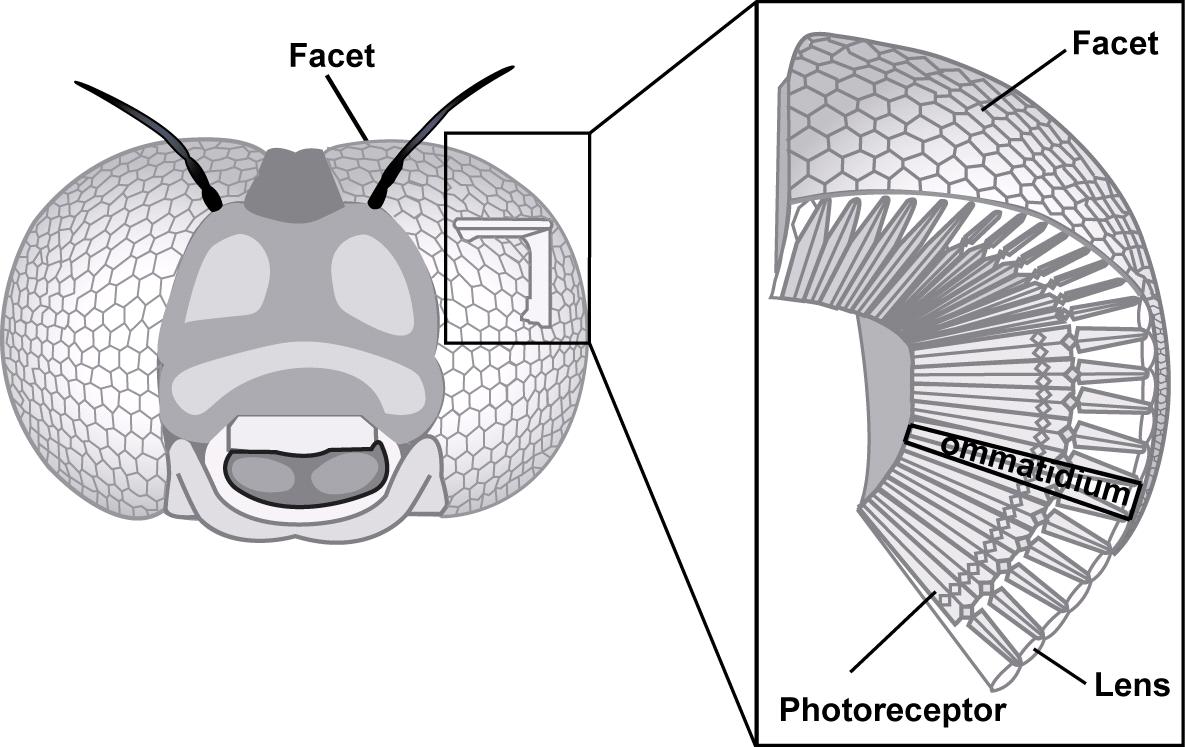
FIG.3– parts of an insect’s compound eye. Re-drawn from Ecole Polytechnique Fédérale de Lausanne.
FIG.4– a frog eye. Re-drawn from Mangold 1931.
FIG.5– a cat’s eye. Re-drawn from Gelatt 2019.
I'll end with some questions I'm planning to look into!
I'll end with some questions I'm planning to look into!
- What's with all the protruding tissue we see in birds and reptiles? Does it hinder light refraction onto the retina in any way?
- Does that ectodermal conus in the reptilian eye have a function? What selective advantages have shaped it this way? (Also, it is a convergent characteristic to pecten, or are the two related somehow...?)
- How many times have fovea evolved independently?
- What's with those certain fish species that can perceive UV light? What evolutionary advantages would this provide underwater?
- What kind of selective pressures drove the evolution of a 3-layered retina in lamprey eyesight? Are there other examples of parasites with good eyes, or is the lamprey a freak exception?
- Why are polychaete eyes shaped like ear endoscopes? And why are sturgeon eyes shaped like sad-looking pastries?
- Eye vs. brain size – positive or negative correlation? Would we get different answers for highly-visual vs. less-visually oriented clades?
- Compound eyes come in a huge variety of patterns, colors, lusters, facet shapes. What environmental factors/niche characteristics influence each quality?
- Determinants of pupil shape?
- When is it more advantageous to have a greater number of eyes rather than eyes that are larger/have better visual acuity and/or range of vision?
SOURCES
Dubielzig, D. (2009). A Survey of Ocular Anatomy and Pathology of Vertebrate Species [PowerPoint slides]. Retrieved from https://www.vetmed.wisc.edu/pbs/dubielzig/pages/coplow/PowerPoints/Wildlife_Dz_Worksh_08.pdf
Warrant, E. Lockett, N. A. (2004). Vision in the Deep Sea. Biological Reviews 79(3):671-712.
Anca-Narcisa, N. Ozana-Maria, P. (2015). “Aquatic” vs. “Terrestrial” Eye Design – A Functional Ecomorphological Approach. Biologie animală, 61: 101-114.
Wilk, L. (2009). Mantis Shrimp Eye Structure and Function, Semantic Scholar. 1-6.
Duke-Elder, S. (1958). System of Opthalmology: The Eye in Evolution. St. Louis, Missouri: C. V. Mosby Company.
Martin, G. R. (2017). What Drives Bird Vision? Bill Control and Predator Detection Overshadow Flight. Frontiers in Neuroscience 1(11):619.
Young, J. Z. (1981). The Life of Vertebrates. Oxford, England: Clarendon.
Gelatt, K. N. (2019). Eye Structure and Function in Cats. Retrieved from https://www.merckvetmanual.com/cat-owners/eye-disorders-of-cats/eye-structure-and-function-in-cats
Fig. 3. Composite eye and ommatidies of an insect [scientific diagram]. From Ecole Polytechnique Fédérale de Lausanne. Retrieved from https://passion-entomologie.fr/wp-content/uploads/2015/12/compound_eye.jpg
Warrant, E. Lockett, N. A. (2004). Vision in the Deep Sea. Biological Reviews 79(3):671-712.
Anca-Narcisa, N. Ozana-Maria, P. (2015). “Aquatic” vs. “Terrestrial” Eye Design – A Functional Ecomorphological Approach. Biologie animală, 61: 101-114.
Wilk, L. (2009). Mantis Shrimp Eye Structure and Function, Semantic Scholar. 1-6.
Duke-Elder, S. (1958). System of Opthalmology: The Eye in Evolution. St. Louis, Missouri: C. V. Mosby Company.
Martin, G. R. (2017). What Drives Bird Vision? Bill Control and Predator Detection Overshadow Flight. Frontiers in Neuroscience 1(11):619.
Young, J. Z. (1981). The Life of Vertebrates. Oxford, England: Clarendon.
Gelatt, K. N. (2019). Eye Structure and Function in Cats. Retrieved from https://www.merckvetmanual.com/cat-owners/eye-disorders-of-cats/eye-structure-and-function-in-cats
Fig. 3. Composite eye and ommatidies of an insect [scientific diagram]. From Ecole Polytechnique Fédérale de Lausanne. Retrieved from https://passion-entomologie.fr/wp-content/uploads/2015/12/compound_eye.jpg
Brach, V. (1977). The Functional Significance of the Avian Pecten: A Review. The Condor 79:321-327.
Palmer, B. A. Taylor, G. J. Brumfeld, V. (2017). The Image-Forming Mirror in the Eye of the Scallop. Science. 358(6367): 1172-1175.
Andison, M. E. Sivak, J. G. (1994). The functional morphology of the retractor lentis muscle of a teleost fish, Astronotus ocellatus. Canadian Journal of Zoology, 1994, 72(11): 1880-1886.
Yoshida, M. Yura, K. Ogura, A. (2014). Cephalopod eye evolution was modulated by the acquisition of Pax-6 splicing variants. Nature, 4 : 4256.
Evans, A. B. Acosta, M. L. (2015). Bolstad, K. S. Retinal Development and Ommin Pigment in the Cranchiid Squid Teuthowenia pellucida (Cephalopoda: Oegopsida). PLOS One, 10(5): 1-11.
Frank, T. Porter, M. (2009). Spectral sensitivity, visual pigments and screening pigments in two life history stages of the ontogenetic migrator Gnathophausia ingens. Journal of the Marine Biological Association of the United Kingdom, 89(1): 119-129.
Rare Type of Killer Whale Spotted!
Before this year, the last sighting of the Type D Killer Whale was 15 years ago and before that the only recored sighting was 64 years ago when a pod of them washed up on the shore of New Zealand. This type of whale is unique from types A, B and C because it differs in appearance. Type D Killer Whales have smaller white patches around their eyes, narrower and pointier fins and snub noses. This year for only a short three hours Bob Pittman, a marine ecologist with NOAA, was able to study them of the southern coast of Africa. He collected the first sample of Type D Killer Whale skin and the first videos of them which will hopefully lead to a better understanding of these amazing creatures.
https://www.nytimes.com/2019/03/07/science/type-d-killer-whale.html
https://www.nytimes.com/2019/03/07/science/type-d-killer-whale.html
Monday, March 11, 2019
Deceptive Orchids, Oh My!

After hearing about how manipulative and clever orchids could be, I decided to investigate how they are able to pollinate so efficiently. I read this interesting paper that focused on Euro-Mediterranean orchids and their pollination strategies, phylogeny, and niche distribution. When it comes to the pollination niche of a plant, it is primarily defined by its pollinator assemblage: quantity, identity, relative abundance and efficiency of pollinators with which it interacts. In plant-pollinator interactions, plant groups in which speciation is mainly driven by pollinator shifts, such as sexually deceptive orchids closely related plants usually interact with different pollinators. (Joffard 2018)
I found it amusing that most of these orchids don't offer any reward to pollinators, but attract them using cues that pollinators typically associate with a food or sex promise. This has lead to the pollinators playing a major role in the diversification of the Orchidaceae family, where these researchers were able to construct a database linking 243 orchid and 773 pollinator species in just the Euro-Mediterranean region! This research revealed that the pool of insect families which orchids interact with, solely depends on their pollination strategy. These results suggest that associations between orchid and pollinator species are more opportunistic than previously thought. So, next time you see a mesmerizing orchid, try not to Bee too attracted to it because it'll try to take advantage of you ;)
Another Post About CF
Okay, so in my research about Cystic Fibrosis and Cholera/Tuberculosis, I also came across another interesting tidbit of information that you all may also find interesting. In 2011, researchers were inspired to test the effects of inhaled hypertonic saline solutions on the health of children with CF after doctors in Australia reported that surfers with CF usually had higher lung functions and lifespans than patients who did not surf (Rosenfeld, 2011). The results of this study supported the theory that inhaling concentrated salt water solutions benefits the health of CF patients. Since then, hypertonic saline solutions were distributed to CF patients as an addition to their primary treatment regimens. I always wondered why saline treatments were considered so effective, but I never really questioned the logic. Especially after living in Santa Barbara for the past year and a half, I do not doubt the benefits of breathing salty air. It wasn't until recently that I read that the reason saline solutions draw water out of cells which helps loosen the mucus in the respiratory tract so it is easier to expel and less likely to build up and cause infections (Goodman and Percy, 2005).
Rosenfeld, Margaret, et al. “Inhaled Hypertonic Saline in Infants and Toddlers with Cystic Fibrosis: Short-Term Tolerability, Adherence, and Safety.” Pediatric Pulmonology, vol. 46, no. 7, 1 Mar. 2011, pp. 666–671., doi:10.1002/ppul.21425.
Goodman, Barbara E., and William H. Percy. “CFTR in Cystic Fibrosis and Cholera: from Membrane Transport to Clinical Practice.” Advances in Physiology Education, vol. 29, no. 2, 2005, pp. 75–82., doi:10.1152/advan.00035.2004.
Rosenfeld, Margaret, et al. “Inhaled Hypertonic Saline in Infants and Toddlers with Cystic Fibrosis: Short-Term Tolerability, Adherence, and Safety.” Pediatric Pulmonology, vol. 46, no. 7, 1 Mar. 2011, pp. 666–671., doi:10.1002/ppul.21425.
CF and Cholera
Hi, y'all! I was interested in the link between Cystic Fibrosis heterozygosity and a higher chance of surviving Cholera, so for my research topic a few weeks ago I decided to look into it further. I found a great article about the theorized correlation, and read that there is another theory that CF heterozygosity is correlated with Tuberculosis. At first, I was confused as to how having an allele for CF, a primarily respiratory disease, could benefit someone in surviving Tuberculosis. It turns out that having thicker mucus in the respiratory tract prevents the bacteria from settling in the lungs because it can become stuck in the mucus and therefore be "coughed" out before the infection can grow (Rodman, 1991).
For those of you who were not already familiar with the Cholera-CF correlation, it is a theory that being heterozygous for Cystic Fibrosis prevents someone who becomes infected with Cholera from losing as much fluid. Cystic Fibrosis also affects the digestive system because the thick mucus prevents fat-digesting enzymes from leaving the pancreas, which usually leads to difficulty gaining or maintaining weight for those homozygous for the CF gene. However, those who are heterozygous for the CF allele have just enough mucus in their digestive tract that it prevents them from losing as much fluid and electrolytes if infected with Cholera (Rodman, 1991). Back in the day, this could have been the difference between life and death for many people, thus explaining why Cystic Fibrosis, a (in some cases) fatal disease, is still prevalent today. It also explains the primarily caucasian demographic because Cholera was a widespread illness throughout Europe in the 19th century (Rodman, 1991).
For those of you who were not already familiar with the Cholera-CF correlation, it is a theory that being heterozygous for Cystic Fibrosis prevents someone who becomes infected with Cholera from losing as much fluid. Cystic Fibrosis also affects the digestive system because the thick mucus prevents fat-digesting enzymes from leaving the pancreas, which usually leads to difficulty gaining or maintaining weight for those homozygous for the CF gene. However, those who are heterozygous for the CF allele have just enough mucus in their digestive tract that it prevents them from losing as much fluid and electrolytes if infected with Cholera (Rodman, 1991). Back in the day, this could have been the difference between life and death for many people, thus explaining why Cystic Fibrosis, a (in some cases) fatal disease, is still prevalent today. It also explains the primarily caucasian demographic because Cholera was a widespread illness throughout Europe in the 19th century (Rodman, 1991).
Rodman, D.m., and S. Zamudio. “The Cystic Fibrosis Heterozygote — Advantage in Surviving Cholera?” Medical Hypotheses, vol. 36, no. 3, 1991, pp. 253–258., doi:10.1016/0306-9877(91)90144-n.
Fossil Repatriation
The repatriation of various illegally obtained artifacts that have been removed from their home countries is a process that also applies to fossil artifacts. In the case of the US, Mongolian dinosaurs are some of the most commonly repatriated fossils-- from 2016 to 2013, the US returned 23 dinosaur fossils to Mongolia. 18 of those specimens were from 2013 alone, including (among other things) two Tyrannosaurids, several Oviraptors, four Gallimimus skeletons, and the skeleton of a Protoceratops. In 2016 there was yet another large-scale return of eggs and fossils to Mongolia, including the skull of an Alioramus-- a very rare specimen of which only two have been discovered, both in Mongolia.
Mongolian law criminalizes the export of fossils and declares that all fossils are property of the country, which means the fossils that are removed must at some point be repatriated. Despite this, there's a thriving black market for Mongolian dinosaur skeletons to be sold-- primarily to private collectors, but also to museums if possible. Fossil poaching in general is a large-scale, yet murky problem in paleontology, and in addition to the removal of valuable contextual evidence about where the fossils were found and the illegality of the venture there is also the problem of fossils being improperly prepared or damaged deliberately. In recent years the problem is being addressed with increasing awareness, and by making this blog post I hope to spread that awareness. So, if any of you happen to be tempted by a fossil with a murky background up for auction... maybe rethink bidding on it.
Links:
Evidence for early life in hydrothermal vent precipitates
The prerequisites of the starting of life are liquid water and organic compounds. Interestingly, liquid water can persist permanently on the earth due to the earth’s size and the distances to the sun. There are three hypotheses of the origins of life: reducing atmosphere, submarine hydrothermal systems, and extraterrestrial Organic compounds that were caused by the intense bombardments. In 2017, scientists analyzed some putative fossilized microorganisms that are at least 3,770 million years old or even older from the Nuvvuagittuq belt in Quebec, Canada. These microorganisms in rocks interpreted the hydrothermal vent-related precipitates and occurred in haematite tubes and filaments. The tubes and filaments, which are in various from sizes and shapes, can explain as the remains of iron-metabolizing filamentous bacteria, which is the proof of exiting of life. Unfortunately, although this finding is exciting, we still do not know whether this is the origin of life.
source:https://www.ncbi.nlm.nih.gov/pubmed/28252057
Dodd, M. S., Papineau, D., Grenne, T., Slack, J. F., Rittner, M., Pirajno, F., ... & Little, C. T. (2017). Evidence for early life in Earth’s oldest hydrothermal vent precipitates. Nature, 543(7643), 60.
Great White Sharks and Cancer
The entire genome of the great white sharks has recently been decoded! This revealed that the great white shark has a huge genome. In theory the risk of developing cancer should increase as the size (number of cells) and life span of an organism increases. But these these large bodies animals do not get cancer more than humans as one might expect, suggesting the they have a superior DNA repair techniques. Through sequencing their genome it was found that genome stability genes are under positive selection! A potential mechanism for rapid wound healing in great whites was also revealed. Since genome instability is a huge problem for human disease, there is potential for a lot to be gained in regards to fighting cancer and age related diseases along with improving wound healing techniques.
Source: https://www.sciencedaily.com/releases/2019/02/190218153238.htm
Source: https://www.sciencedaily.com/releases/2019/02/190218153238.htm
Have No Fear, No Space Superbugs Here
A recent work published in mSystems studied the microbial adaptations of bacteria in a built environment, specifically those found in the International Space Station (ISS), in an effort to understand and strategically mitigate any potential health effects.
Scientists from Northwestern University and NASA's Johnson Space Center used comparative pangenomics to study two common members of the indoor microbiome B. Cereus and S. aureus isolated from the ISS as well as those on Earth, soil, and humans. The ISS is a relevant model system for studying the underlying mechanisms behind microbial persistence in the built environment due to the constant human occupancy and controlled environmental conditions, along with routine microbial monitoring.
Analysis of the pangenomic data showed that members of the built microbiome, both on Earth and in the ISS, contain distinct characteristic genomic signatures from their human-and/or soil-derived counterpart strains. The signatures were of those involved in complex biological processes necessary for survival, most not having direct impacts on human health.
Space and its harsh conditions are not causing the bacteria on the ISS to mutate into dangerous superbugs. The differences in the genome of the ISS bacteria to their earthly counterparts did not make the bacteria more harmful to people. It is believed that the bacteria are simply evolving to survive the cold and barren environment of the ISS.
Link to article: https://msystems.asm.org/content/msys/4/1/e00281-18.full.pdf
Scientists from Northwestern University and NASA's Johnson Space Center used comparative pangenomics to study two common members of the indoor microbiome B. Cereus and S. aureus isolated from the ISS as well as those on Earth, soil, and humans. The ISS is a relevant model system for studying the underlying mechanisms behind microbial persistence in the built environment due to the constant human occupancy and controlled environmental conditions, along with routine microbial monitoring.
Analysis of the pangenomic data showed that members of the built microbiome, both on Earth and in the ISS, contain distinct characteristic genomic signatures from their human-and/or soil-derived counterpart strains. The signatures were of those involved in complex biological processes necessary for survival, most not having direct impacts on human health.
Space and its harsh conditions are not causing the bacteria on the ISS to mutate into dangerous superbugs. The differences in the genome of the ISS bacteria to their earthly counterparts did not make the bacteria more harmful to people. It is believed that the bacteria are simply evolving to survive the cold and barren environment of the ISS.
Link to article: https://msystems.asm.org/content/msys/4/1/e00281-18.full.pdf
Fruit Flies and "Brotherly" Love
While most organisms avoid inbreeding (not counting plants, they self-fertilize all the time), as their genes cannot spread and there are potential risks present, certain species specifically keep their genes within the family (lions, certain bird species, and fruit flies are well known to exhibit this behavior). Fruit flies are especially seen to be selective in this regard, potentially using this phenomena as a way to wipe out bad mutations and to maintain inclusive fitness (preserving the "pure" bloodline that has proven to be successful). The females prefer to mate with their brothers over unrelated flies, while choosing their father about half of the time when given the choice between them or an unrelated individual. The males however seem to have no real preference when it comes to mating, they will mate with their sisters about half of the time (they also attempted to woo their mothers, but those were unsuccessful, likely because the mothers were unable to mate at the time).
Source:https://www.realclearscience.com/journal_club/2012/12/13/female_fruit_flies_mate_with_brothers_dad_106423.html
Source:https://www.realclearscience.com/journal_club/2012/12/13/female_fruit_flies_mate_with_brothers_dad_106423.html
The sixth Extinction?
Our planet is said to be in the midst of its sixth mass extinction of plants and animals. We are currently experiencing the worst rate of species die-off since the extinction of dinosaurs. The natural rate of extinction is 1-5 species per year. But, even with human effort to save more species, we are losing species at 1000-10,000 times the natural rate. If this continue, 30-50% of species will be lost in mid century.
Although unsure about the cause, human is a big factor in this kind of extinction. 99% of currently threatened species are at risk of human activities, such as loss of natural habitat, invasive species and global warming.
While conservationists focus their efforts on species-rich region, saving habitat with fewer species is also important, as loss of species will be devastating in these areas.
Link to article: https://www.biologicaldiversity.org/programs/biodiversity/elements_of_biodiversity/extinction_crisis/index.html
Although unsure about the cause, human is a big factor in this kind of extinction. 99% of currently threatened species are at risk of human activities, such as loss of natural habitat, invasive species and global warming.
While conservationists focus their efforts on species-rich region, saving habitat with fewer species is also important, as loss of species will be devastating in these areas.
Link to article: https://www.biologicaldiversity.org/programs/biodiversity/elements_of_biodiversity/extinction_crisis/index.html
Saturday, March 9, 2019
Spider mouths
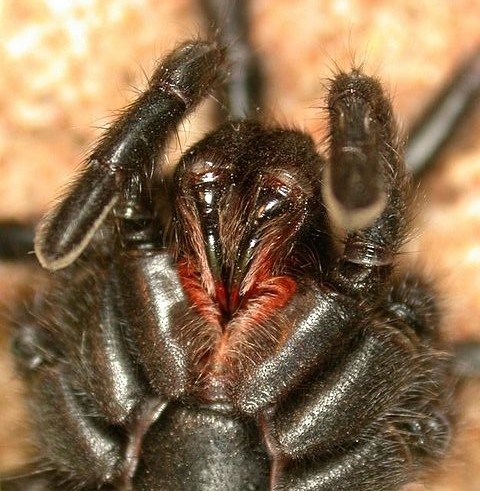
Recently I saw a short video of a tarantula drinking water, which made me realize exactly how little I know about spider anatomy and prompted me to learn more. I already knew spiders had mouthparts called "chelicerae", aka their "fangs". However, I did not know that the actual spider mouth and esophagus was located behind the chelicerae on the underside of the spider, and I also did not know that spiders can also consume some solid parts of their prey (I had been under the impression that spiders only consumed fluids). One family of spiders called the Archaeidae (aka pelican spiders) apparently has a very odd way of consuming prey-- they have remarkably long chelicerae they use to hunt and consume other spiders. Here are links on spider anatomy and pelican spiders and a link to a picture of a spider's mouth.
Ichthyosaur body plan evolution and swimming efficiency
Scientists at the University of Bristol used computational fluid dynamics and models to determine how the changes in ichthyosaur body plans over time (from longer "lizard-shaped, flexible bodies and elongate tails" to more fish-like bodies) could have affected drag in the water, swimming efficiency, possible energy output, and other factors. Turns out that the changes in morphology didn't necessarily decrease drag; rather, they might have been relevant in relation to ichthyosaur mass and the energy required to swim at different sizes.
Here is the paper: https://royalsocietypublishing.org/doi/full/10.1098/rspb.2018.2786
And here is an article about it: https://www.sciencedaily.com/releases/2019/03/190306081714.htm
Here is the paper: https://royalsocietypublishing.org/doi/full/10.1098/rspb.2018.2786
And here is an article about it: https://www.sciencedaily.com/releases/2019/03/190306081714.htm
Friday, March 8, 2019
The Last Vaquitas
Yesterday there was grim news about one of the rarest organisms on our planet. There are only (at most) twenty two vaquita left now. This tiny porpoise is being increasingly threatened by fishermen who use gill nets that entrap and drown them while the fishermen hunt totoaba (a grouper only hunted for their swim bladders, a delicacy in China; this species is also very endangered as a result). The only thing preventing their complete extinction is the activists and Mexican police and marines attempting to defend them, but it hasn't been easy for them. They are often attacked at sea by the angered fishermen (sometimes even with firebombs), and the efforts to stop and reimburse the fishermen have been largely unsuccessful, as the fishermen themselves are usually in dept to the Chinese and Mexican traders who oversee the illegal fishery. One of them was even murdered when he couldn't pay them back. With the failure of placing them in captivity for breeding, the situation for this elusive species is increasingly dire. Unless a drastic solution can present itself, this beautiful creature will likely disappear for good.
Source: https://www.courthousenews.com/just-22-vaquita-porpoises-remain-mexico-reports/
Source: https://www.courthousenews.com/just-22-vaquita-porpoises-remain-mexico-reports/
Killer Whales Could get a new Cousin
Whales come in all shapes and sizes, and all are different from each other. Among them, orcas are probably some of the most famous for their distinctive color and prominent feature in entertainment like 'Free Willy' and Seaworld. However, marine biologists may have just discovered a close cousin to the orca. These new whales have the same coloring but have a different body and head shape from their more well-known relatives. Scientists have taken genetic samples from the emergent orcas and are awaiting genetic analysis to determine the similarities and differences between them and the whales we know and love.
Link to the article here: https://www.cnn.com/2019/03/08/world/killer-whale-mystery-discovery-trnd/index.html
Link to the article here: https://www.cnn.com/2019/03/08/world/killer-whale-mystery-discovery-trnd/index.html
Thursday, March 7, 2019
UC Takes a Stand on Open Access
After months of impasse, the University of California System (UC) has decided to walk away from negotiations with the publishing company Elsevier following the end of a previous five-year contract. Elsevier, one of the largest publishing companies for scientific, technical, and medical text, has several high-profile imprints and journals including Cell Press and The Lancet.
The UC system, which accounts for almost 10 percent of the nation's research publications decided to walk away from the negotiating table after goals of a cost-sustainable contract as well as open-access to journal articles and research conducted by UC affiliates were not met. The previous contract with Elsevier cost around $11 million per year, which is 25 percent of UC system-wide journal costs. The UC tried to negotiate for a "read-and-publish" three-year contract that would make all articles published by UC authors free to the public while providing a break on subscription fees. However, Elsevier would not agree to the proposal and instead proposed a contract that would increase the cost of the contract by 80 percent.
In the absence of negotiations, the UC has assembled its libraries to provide its faculty and students with alternative means of access as a result of the contract termination and loss of direct access to articles published by Elsevier. The interlibrary loan system and use of the library acquisition budget to invest in open access initiatives are being utilized as a way to address the absence of Elsevier journals.
Elsevier had already reached impasses with other labs and universities in Europe, but the UC is among the first U.S. institutions to rebuff Elsevier over costs. The statement made by the UCs can serve to inspire and or guide other institutions who may be facing similar circumstances.
The UC system, which accounts for almost 10 percent of the nation's research publications decided to walk away from the negotiating table after goals of a cost-sustainable contract as well as open-access to journal articles and research conducted by UC affiliates were not met. The previous contract with Elsevier cost around $11 million per year, which is 25 percent of UC system-wide journal costs. The UC tried to negotiate for a "read-and-publish" three-year contract that would make all articles published by UC authors free to the public while providing a break on subscription fees. However, Elsevier would not agree to the proposal and instead proposed a contract that would increase the cost of the contract by 80 percent.
In the absence of negotiations, the UC has assembled its libraries to provide its faculty and students with alternative means of access as a result of the contract termination and loss of direct access to articles published by Elsevier. The interlibrary loan system and use of the library acquisition budget to invest in open access initiatives are being utilized as a way to address the absence of Elsevier journals.
Elsevier had already reached impasses with other labs and universities in Europe, but the UC is among the first U.S. institutions to rebuff Elsevier over costs. The statement made by the UCs can serve to inspire and or guide other institutions who may be facing similar circumstances.
Sloth Fur!
After hearing about the incredible complexity of sloth fur in class I just had to know more so I found and read an article from The New York Times titled, The Sloth's Busy Inner Life. The article starts of by describing the three aspects to the sloth itself, the sloth's fur, the moth species that inhabit the sloth's fur, and lastly, the algae that grows within the grooves of the sloth's fur. The article continues on to go into more general and fur related sloth facts.
https://www.nytimes.com/2014/01/28/science/the-sloths-busy-inner-life.html
https://www.nytimes.com/2014/01/28/science/the-sloths-busy-inner-life.html
The Perception of Color Signals in Songbirds
In my evolution seminar this week we read a paper by Eleanor Caves, a potential evolution faculty hire here at UCSB. The paper described the methods and reasoning behind testing the "categorical perception of color signals in songbirds", specifically the zebra finch. Caves will be giving her interview seminar on March 18th in the MSRB Auditorium, I would greatly recommend attending especially if you are interested in birds.
Categorical perception of color signals in a songbird: https://www.nature.com/articles/s41586-018-0377-7
Categorical perception of color signals in a songbird: https://www.nature.com/articles/s41586-018-0377-7
Wednesday, March 6, 2019
"Poop Pills" and Big Pharma
I was scrolling through New York Times articles when I came across this discussion of the new treatments that we discussed in class: poop pills which transfer sections of a relatives microbiome to other patients. Unsurprisingly, the pharmaceutical industry appears to be incredibly interested in this new treatment. This already multimillion dollar industry is being fought over by the research and pharma industries, with pharma lobbying the FDA to make the new treatment considered a drug (which allows for much more business in terms of marketing and development with added active ingredients), while the research industry doesn't yet believe it's ready for wide distribution and sees it more along the lines of an organ transplant. An interesting third option is raised regarding the creation of a new category by the FDA specifically for microbiome transfers. You can read more about it here: https://www.nytimes.com/2019/03/03/health/fecal-transplants-fda-microbiome.html
Bird Journal - Brown Pelicans

Brown pelicans are the lumbering Paul Bunyans of the seabird world. The snaking arcs of their necks look almost prehistoric, and indeed, the earliest known pelican, dating back to over 30 million years ago, exhibits little to no change in fundamental morphology (Louchart, Tourment, Carrier 2011)!
As exclusively-oceanic predators, they have a bunch of cool sea-faring adaptations: specialized glands that allow them to drink salt water (Schmidt-Nielsen, Fange 1958), air sacs under their skin for added buoyancy (US Fish and Wildlife Service 2009), as well as a hunting technique that is novel amongst other Pelecaniids.
The brown pelican is unique in that it’s the only plunge-diving pelican species in existence (2009). While most others of its clade will scoop at fish while sitting at the water’s surface, brown pelicans dive-bomb the sea like war jets, tucking their wings behind them in one deadly thrust. The timing of this part is crucial. If they don’t corkscrew to the right by just the right amount, they could fatally injure their trachea and esophagus.
Assuming all goes well underwater, they flap their gums open. Their gular pouch balloons out like a 3-gallon net, ensnaring the hapless fish between their jaws: anchovies, sardines, herring, sheepshead, mullet, pigfish… Occasionally, they’ve even been seen gulping down crustaceans (2009).
These ambush strategies have proven fruitful in chasing the ever-fast and finicky epipelagic fish, but plummeting from heights of 60 ~ 70 feet is not a skill they are born with (2009). Before maturing into sleek, bow-winged adults, pelican youngsters look something like this:

It’s like an overcooked marshmallow tried to grow feathers (a 3-5 month old juvenile) – July 3, 2017. San Francisco, CA.
These little ones, while cute, are honestly terrible at fishing. I got the chance to see this particular one attempt a dive, during which it lost balance and smacked against the water in an explosive belly-flop! A 1969 paper, “Age and Hunting Success in the Brown Pelican (Pelicanus occidentalis)” by Gordon H. Orians, attests that plunge-diving is a technique that takes years to develop. Using a paired t-test of nearly 2000 observations off the coast of Playas del Coco, Costa Rica, Orians compared the catch rates amongst different life stages of brown pelicans, and found significant evidence that the learning period for the juvenile birds takes at least 18 months to 2 years (1969). Orians remarks that this phenomenon, if widespread, could in part explain why brown pelicans, as do many sea-faring bird species, exhibit an unusually delayed maturation (1969) – while juvenile brown pelicans fully fledge at about 3-5 months of age, they don’t reach sexual maturity until they’re about 3 years old (US Fish and Wildlife Service 2009).

Once they hit breeding age, their chocolatey manes melt away. Their lores and bill area flush with color, and their eyes metamorphose from deep brown to salty-pale.
As social birds, adult pelicans can often be seen soaring together in V-formation over the beaches of North and South America. There are lots of them diving off Santa Barbara and especially IV, so next time you see one of these bombardiering specialists, try and see if you could pick out the steps in its technique!
SOURCES:
Department of the Interior, U.S. Fish and Wildlife Service (2009). Brown Pelican [Fact sheet]
Retrieved from
https://www.fws.gov/home/feature/2009/pdf/brown_pelicanfactsheet09.pdf
Louchart, A. Tourment, N. Carrier, J. 2011. The earliest known pelican reveals 30 million years of evolutionary stasis in beak morphology. Journal of Ornithology, 152(1): 15-20.
Orians, G. H. 1969. Age and Hunting Success in the Brown Pelican (Pelecanus occidentalis). Animal Behavior, 17: 316-219.
Schmidt-Nielsen, K. Fange, R. 1958. The Function of the Salt Gland in the Brown Pelican. The Auk, 75(3): 282-289.
Second cured HIV patient
Recently, a second HIV patient has been cured using the same method 12 years ago which the first patient is known to be cured. The method has been tried to duplicate multiple times and failed. The recent surprise success confirms that a cure for HIV is possible, even if it is difficult.
The treatment is done by bone marrow transplant, from a donor with a mutation in a protein called CCR5, which rests on the surface on the immune cells. HIV uses CCR5 to enter the cell, while it could not enter the mutated version.
Although the treatment successfully cured HIV, the complications of the treatment lead to difficulty. The first cured patients nearly died because of intense complications. However, the second cured patients gives more hope. The patient has Hodgkin lymphoma, who then received a bone marrow transplant with mutated CCR5. The treatment was less intense, but he is cured of both cancer and HIV.
These successful treatment has raised hope for gene therapies for HIV by knocking out CCR5 on immune cells. None has made a strong advancement yet, but there is always hope after these two successful cases.
Link to Article: https://www.nytimes.com/2019/03/04/health/aids-cure-london-patient.html
The treatment is done by bone marrow transplant, from a donor with a mutation in a protein called CCR5, which rests on the surface on the immune cells. HIV uses CCR5 to enter the cell, while it could not enter the mutated version.
Although the treatment successfully cured HIV, the complications of the treatment lead to difficulty. The first cured patients nearly died because of intense complications. However, the second cured patients gives more hope. The patient has Hodgkin lymphoma, who then received a bone marrow transplant with mutated CCR5. The treatment was less intense, but he is cured of both cancer and HIV.
These successful treatment has raised hope for gene therapies for HIV by knocking out CCR5 on immune cells. None has made a strong advancement yet, but there is always hope after these two successful cases.
Link to Article: https://www.nytimes.com/2019/03/04/health/aids-cure-london-patient.html
Plant Restoration in California!

After visiting CCBER, I was inspired to look more into the process of plant restoration and how it is done in our beautiful state! I came across this interesting paper that discussed restoring degraded grasslands in California and how it involves re‐establishing populations of native grasses that can withstand increasing drought stress to ensure growth beyond initial establishment. In this project, the researchers used four populations of Elymus glaucus, a perennial grass from California's Mediterranean‐climate region.
The researchers started off the project by determining that these plants prefer to grow in light and shallow soil moisture, and relatively have low investment in storage in order to survive severe droughts. The team really focussed on trying to ensure that this plant could be as drought resistant as possible so they could thrive in California's increasingly dry seasons. Here, they learned that there are many implications to consider in restoration projects, and in this case, the researchers discussed that by focussing on one performance of the plant can actually affect another performance. For example, planting a species that highly tolerant to drought and is more resource-conservative, thus may be easily outcompeted by surrounding invasive grasses. This also raised the question as to whether climate change would end up favoring invasive plants even more instead of the native species.
Overall, I really liked how this paper raised many ecological questions, not just biological ones. While stressing the general importance of getting rid of invasive species and conserving native plants, they didn’t undermine how complex restoring better-suited species can actually alter the ecosystem in an undesired way. I liked the paper concluded by stating that accounting for trait trade-offs of essentially any species can help secure long‐term stress resilience of restored ecological communities.
Subscribe to:
Posts (Atom)