http://www.1millionwomen.com.au/2014/05/12/video-this-is-what-climate-coverage-should-be-like/
For Biology students in the College of Creative Studies at the University of California Santa Barbara.
Saturday, May 24, 2014
Tired of the doom and gloom
If you just want a couple laughs about climate change (mainly global warming aspects) and about society's apathy for "preservation of resources for future generations," check out this short video clip.

http://www.1millionwomen.com.au/2014/05/12/video-this-is-what-climate-coverage-should-be-like/
Tuesday, May 13, 2014
An interesting paper published last month argues that there may be a correlation between mobile phone use and brain tumors.
Any possible negative effects could have dramatic impacts, given the frequency with which phones are used. The paper cites the statistic that there was "a startling 6 billion [cell phone] users worldwide in 2011." That is, the vast majority of the human population has at least used a cell phone.
There has been, in recent years, a variety of papers detailing different potential negative effects of cellphone use ( for example, see here, here, and here).
The effects of prolonged exposure to cellphone radiation is still unknown, but could be very significant.
Thursday, May 8, 2014
Defying Trophic Levels
Urchin eating baby cormorant bird.
You might have gotten this email too, but just in case I wanted to share this strange phenomenon. In ecology we often look at a fixed trophic structure or even a complicated food web. I think this proves that the food web is more dynamic than we realize. Urchins have a pretty adaptable diet. Maybe birds are not a preference, but I'm sure this meal was nutritious! (It still gives me the creeps though.)
Check out the article for video proof:
http://deepseanews.com/2014/05/anemone-consumes-a-baby-seabird/
This is a link to the paper recently published from a study in oregon: http://www.marineornithology.org/PDF/42_1/42_1_1-2.pdf
Labels:
Animal behavior,
Animal ecology,
bird,
ecology,
Marine Biology,
urchin
Tuesday, May 6, 2014
"16 and Pregnant" and the Impact on Birth Rates
Remember back to a few weeks ago at the beginning of the quarter when we talked about what might be impacting the birth rates? Well, you probably would never guess it, but the MTV show "16 and pregnant" might actually be causing a lower rate of teen pregnancy. I just came across this interesting NY Times article from January which talks about how young people watching this show are more likely to see it as a cautionary tale and thus it's influencing teens to NOT get pregnant. I thought this was so interesting, who would've ever thought a trashy show like this could have some positive impact by promoting safer sex!
Check it out here:
http://www.nytimes.com/2014/01/13/business/media/mtvs-16-and-pregnant-derided-by-some-may-resonate-as-a-cautionary-tale.html?_r=0
Monday, May 5, 2014
The Mantis Shrimp Will Knock Your Socks Off... Literally
I recently heard about this really cool shrimp. It is unreal how adapted it is and what physical characteristics it has. It has the best color vision of any animal with 16 color receptive cones (humans have 3 and butterflies have 5.) It can punch with the force of a .22 caliber bullet (1,500 newtons of force in 3/1000 of a second.) If we could move our arms that fast we would be able to throw a baseball into orbit. With that punch they can boil the water and make a shockwave that kills their prey even if they miss it. It pretty interesting. I'll attach a very easy-to-read link and a wikipedia article if you want to read about them.
Mantis Shrimp Easy-To-Read
Mantis Shrimp Wiki
Sunday, May 4, 2014
Should we destroy our remaining smallpox stockpiles?
On May 8, 1980 the WHO endorsed the statement that smallpox had been eradicated.
Now, more than 30 years since its eradication, only two high security labs hold the remaining samples of the smallpox virus. The samples are only used for research purposes to create vaccines and drugs in case of the return of the virus. It has also been revealed that researchers are able to use synthetic biology to create a version of smallpox from scratch. Currently, the WHO is debating as to whether or not the live virus is needed anymore. This article discusses the debate and some issues that need to be taken into consideration before a definite decision is made.
Friday, May 2, 2014
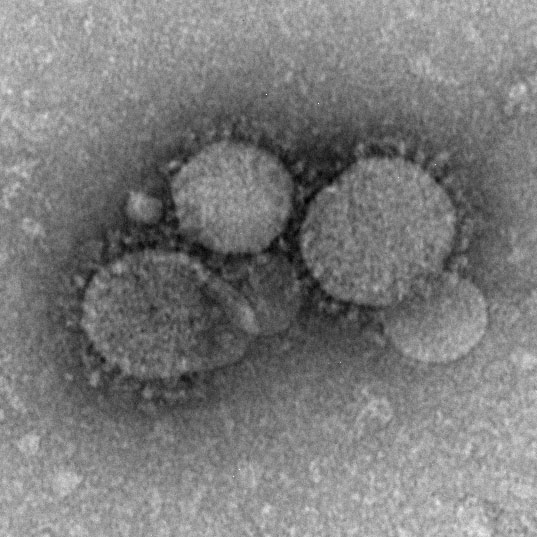
MERS comes to America
| MERS |
NBC Article
Information about the Virus from the CDC
Early paper talking about transmission of the disease
Flying Camel
Subscribe to:
Posts (Atom)